
Controlling Powdery Mildew On Grapes
Powdery mildew is the main fungal disease that most grape growers confront every seasons. The fungus that cause powdery mildew is called Uncinula Necator.
Many grape growers struggled to keep powdery mildew under control in vineyards, as once your vines are infected and the symptoms are visible, the disease already is in an advance stage of development.
The symptoms are visible on all green parts of the grape vine.
On the berries:
A white powdery substance covers the berries – it looks like a white dust that can be rubbed off. These “dust” particles are the actual spores of the powdery mildew fungus. Infected berries will have what appears to be a net-like pattern when the “dust” is rubbed off with your finger. They most probably will crack open and dry up. If the infection takes place early and the fungus disease spreads too fast, it can cause total crop loss!

Berries are extremely susceptible from the immediate pre-bloom stage through fruit set. This is the most critical time to keep powdery mildew under control. Severe powdery mildew infections on the clusters is usually a result of poor fungus control and canopy management throughout this period.
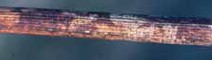
On the canes (in the dormant season), you can see old infections because they will show up as brown areas. As the fungus grows on the grapes and vines and begins to produce spores you will see that the tissue that is infected with have an ash grey powdery look.
On green shoots, the same powdery “dust” will be visible. The fungus will infect the green tissue, and will reduce photosynthesis and overall grape vine vigor.
On the leaves:
Powdery mildew on the leaves of a grape vine, appear as a white dust on the upper and lower part of the leaves. With severe infections, discoloration and drying out of the leaves are visible. No need to say how bad this is for berry size, sugar development and overall growth of the vine!

I often get emails asking about continuous powdery mildew infections, year after year. There is only one explanation for this – the fungus spores over-winter on the grape vine and in the following growing season, once the conditions for inoculation is ideal, the infection will start again. As you can imagine, this is a vicious circle, that will give you many headaches!
What is the ideal conditions for the inoculation?
For the powdery mildew, fungus to develop and spread there needs to be free water (from rain, over-head irrigation and even high humidity) and heat. Spore cells, or cleistothecia overwinter within cracks in the bark of the vine and when rains of approximately 0.1 inch (10 mm) or more occur in spring, and if temperatures are at least 50 °F (10° C), these spores are released and will infect the nearby leaves, canes and bunches. The higher the temperature, the more spores will be released. The optimum temperature is mid 80s ° F or mid 20s ° C and higher is the optimum temperature for high spore release. When the temperature reach the high 90s (+30’s ° C), the development or spread of powdery mildew will be restricted.
Controlling Powdery Mildew:
Chemical control: With the wide range of fungicides now registered for use on vines, the question arises as to which is best and when is the most appropriate time to apply. Where powdery mildew control is poor this is usually due to inadequate spray coverage or the interval between sprays being too long rather than reduced fungicide efficacy.
As said earlier, grape berries are most susceptible to powdery mildew during the period from just before flowering to 4 to 5 weeks after fruit set, and failure to control the disease during this period can result in serious crop loss. The best control is achieved by applying a fungicide with an active ingredient called strobilurin or DMI fungicides during this period.
Organically: Controlling Powdery Mildew organically is much harder. The most important point to remember is that moisture and heat is needed for the fungus to spread.
Maintaining proper airflow and sunlight penetration into the vine will ensure a “drier” micro climate inside the vine. Direct contact with sunlight will also kill powdery mildew spores and reduce the chances of crop loss. This can be achieved with good canopy management (suckering, leave pulling, tying of shoots, removing of water shoots etc. (consult the Complete Grape Growing System for details, it’s all there!).
I hope this article will help you solve Powdery Mildew problems on your grapes.
Remember: Maintain a proper canopy, keep your spray applications up to date and be on the look-out for the symptoms I’ve shown you.
Take care
Danie (The Grape Guy)
Was this helpful. Now learn how to grow your grape vine the correct way.
For only $29, you get instant access to all the grape growing information you need, PLUS get some bonus videos of how to prune and train a grape vine. The Complete Grape Growing System is a digital product. You will not receive any physical products.
Tagged with: how to grow grapes
Filed under: grape diseases • growing grapes • how to grow grapes • powdery mildew on grapes
Like this post? Subscribe to my RSS feed and get loads more!

Hi Danie,
I did the fungicide treatment before and after the rain, no matter how many times it rain, don’t wait until it is hot and muggy or else you can’t catch them up. I used myclobutanil or phosphate and
lime sulphur during dormant season. Healthy vines will not get sick unless there are fungus around the area on cracks, grasses,
soil and trellis.
Words of wisdom! Thanks Grace
can you Recomend some Indian Fungicides and dosage
Srinivas, I’m not sure what is available in India.
Can you give me the names of some of the recommended products
Dear Dain,
Thank you for sending this useful information.
This disease is a big problem in our country in grap gardens.
sharing this information will help gardeners to control this disease before any damage.
Warm Regards,
Hafizi, Afghanistan
Hi Hafizi,
Wow, Afghanistan! My Grape Vine surely reach out to all parts of the world.
Thx for the reply.
Danie
Very informative and usefull. We at Dehra Dun (INDIA) normally do not encounter Mildew but still is was great reading it. Can I use it for educating the Grape Growers here?
Regards
Hi Satish,
You may use the info, just as long as you give my website credit for it.
Danie
Danie,
I had a small bout with this. It is dry here but we had some late rains and humidity. Organically or otherwise, check out a product called Stylet Oil. It appears to work well as an erradicant and preventor.
Scott
New Mexico
Hi Scott,
Personally I have never used Stylet Oil myself, but if some other grape growers reading this post can comment, it would be very helpful.
Thanks for your input Scott.
Danie
one last fyi….heres a link to a Cornell study…its a little dated 2003 but the info pertaining to strobilurin or DMI is still important.
http://vegetablemdonline.ppath.cornell.edu/NewsArticles/Cuc_Strob.htm
Thx Ron
Hey Danie…your site an course are great….im in Massachusetts…NE USofA….we ha a wicked time with this stuff this season….lots of rain early and cool then hot…the stuff just took off. I had it under control with milstop, neem and sodium bicarb..on a 3 day cycle during peek times…..all was well until i went on a 2 week vaca…while i was gone it was hot and wet…..all hell broke loose and it went wild..i was able to save the grapes but the effect on the leaves made my grapes tasting like sweet tarts. Around here i dont think grape variety matters. it multiplies on everything. if you have a garden in close proximity dont forget to control it there also…otherwise it’ll jump from your cukes or squashes….so fight it on your lawn, garden, grapes and other fruits at the same time….and above all…alternate product applications and DONT MISS DAYS !!!! remember to re-apply after a rain storm.
Hi Ron,
Thanks for the kind words my friend.
You are spot on with the comments you made. Don’t let this disease catch you off guard!
Danie
When I purchased my home in 2002 the grapevines were many years old, possibly 25 years. The last 3 years the grapes develop but then turn brown. They don’t dry up, just turn brown. Could this be due to powdery mildew? I know nothing about maintaining grapevines.
Hi Jackie,
It could be, but it sounds more like black rot to me.
If you have pictures, you can send it to me.
Danie
Can you please recommmend so mildew resistant varieties.
Many thanks.
Most commercial grape (Vitis vinifera) cultivars are susceptible to powdery mildew – unfortunately. Some more than others, but it is a known fact that most American hybrades are to be more resistant to powdery mildew.
Actually Roger, the weather and as I said, canopy management plays a huge role when it comes to powdery mildew