subscribe
Who else wants to learn how to grow grapes? This grape growing blog is your free resource to growing grapes.

Archive for January 2009

The annual lifecycle of a grape vine

In this article, I want to share with you the importance of understanding the annual lifecycle of the grape vine.  Often new grape growers make the mistake of thinking that if they prune their grape vines during the dormant season, they have done enough to ensure their grape growing success. 

Off course, pruning a grape vine is important, don’t get me wrong, but there’s so much more to growing grapes, than simply just pruning.


A single manipulation, like pruning, is only part of the bigger picture when it comes to growing grapes but to be a successful grape grower, you need to know what to do during each and every stage of the annual lifecycle of the grape vine.  Leaving out only one important manipulation, like leaf pulling as explained in a previous post, can result in having poor quality grapes or even no grapes at all.


The annual lifecycle of a grape vine:


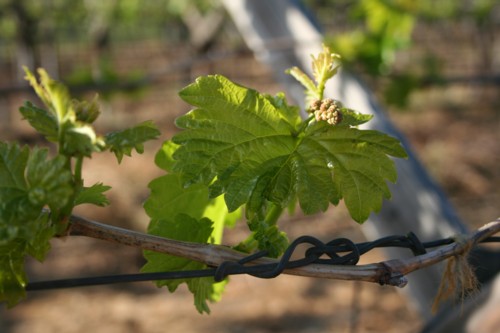
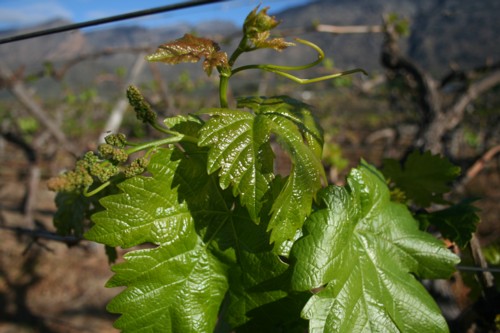
The first signs of bud break in spring. 


This time of the season, the shoots that develop, are very susceptible to frost damage so you need to protect it from frost damage.  It is also the best time to plant your new grape vines.


Depending on your climate, the first leaves will open about 4 weeks after bud break.  Your grape vines are still very susceptible to frost damage, so protect them.  With some very fruitful varieties, the first grapes will be visible as well.  This is the time when the grape vine starts building up energy through the process of photosynthesis.


When the shoots are about 5 to 6 inches in length, your need to spray for powdery mildew.  Protect the surface of the small leaves from diseases to maximize photosynthesis.  And as soon as the flower clusters developed, it is imperative that you keep your vine fungus free.


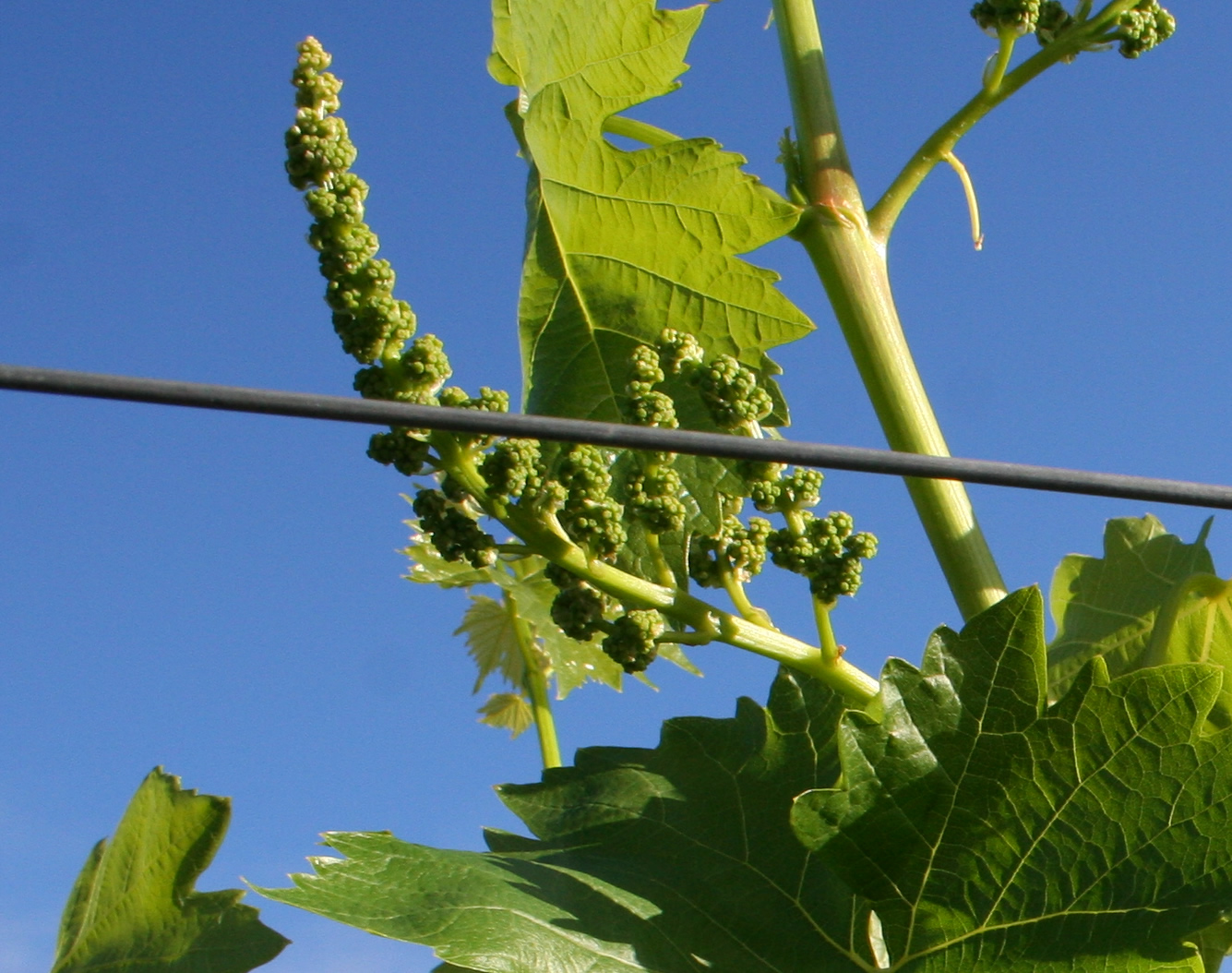
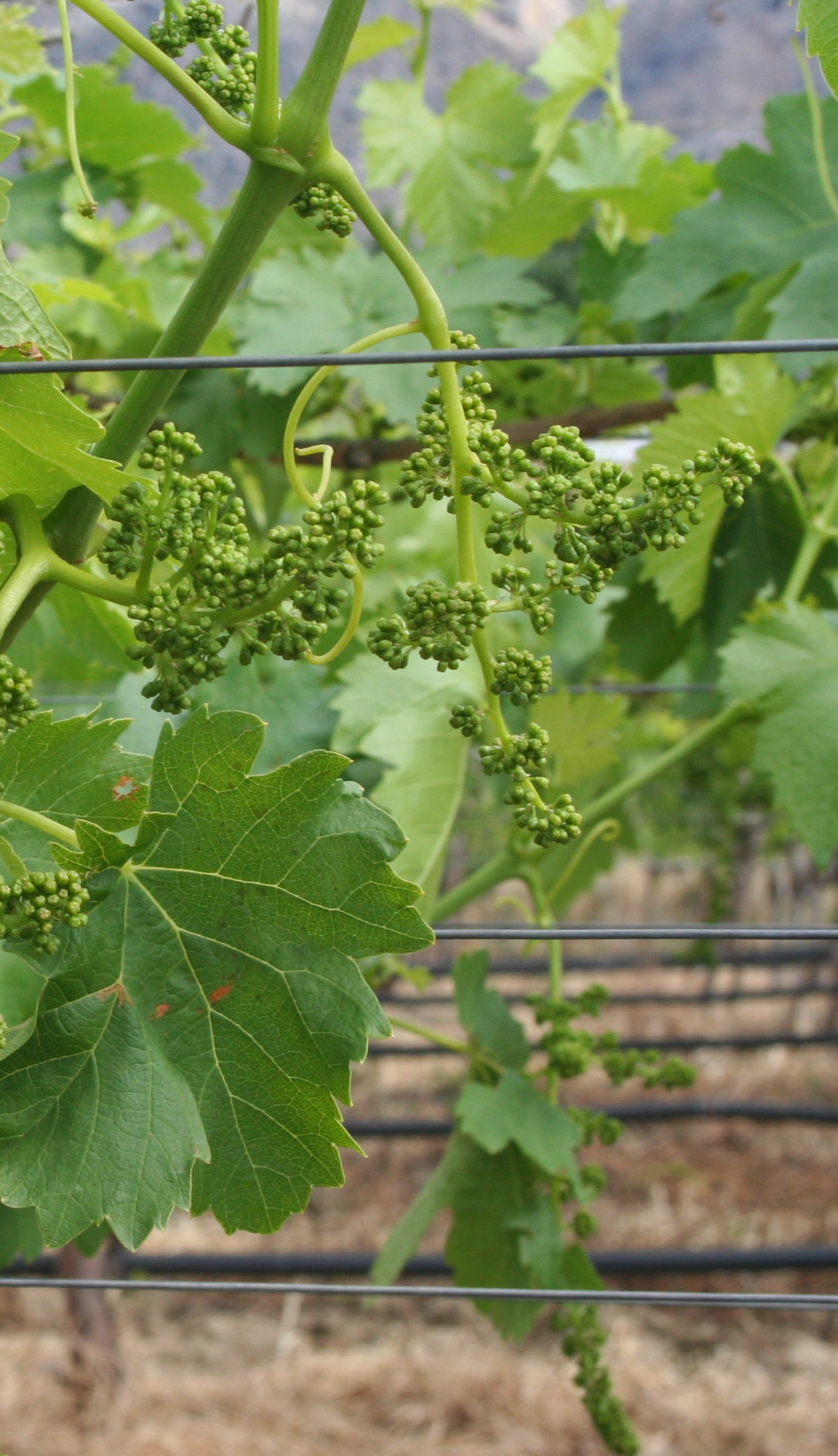
Now it’s time to do suckering (removing of unnecessary shoots) and also to remove water shoots to ensure all energy goes into forming and developing the flower clusters.  On some very fruitful varieties, you can start reducing the crop by removing flower clusters before they start flowering.  Your grape vine’s shoots should be well developed by this stage.


Flowering:


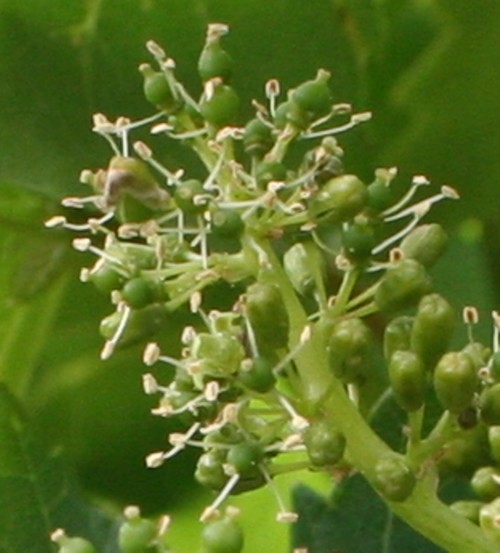
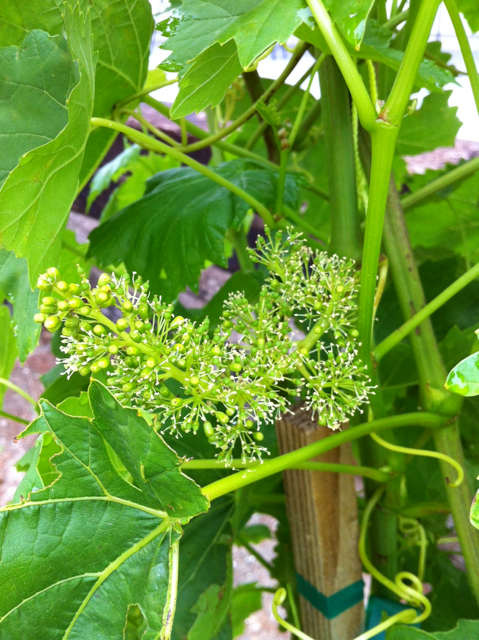
About 10 weeks after bud break, depending on your climate and variety, the first flower clusters will start to flower.  Flowering or blooming is the stage where the pollination and fertilization of the grape vine takes place,to develop the grape berries. 


While the grape vine is flowering, the ideal climate is mild, wind-free days with no rain.  Unwanted climate conditions (rain, too hot or too cold days, and lots of wind), can prevent proper pollination and could result in too compact bunches or too loose bunches with only a small number of berries per bunch


Grape vines are very susceptible to powdery and downy mildew during this stage, so keep your spray program up to date.


Fruit set:


Just after flowering, the grape vine goes through a stage we call fruit set.  During this stage, all the fertilized flowers will start to develop into berries and those that didn’t, will fall off.  The conditions during flowering will greatly determine how many berries will develop and how many not.

During fruit set, it is critical that you grape vines don’t dry out too much as this is the stage where cell division takes place.  The more cells that will develop, the more there are to enlarge (next stage) and the bigger berries you grape vines will bear.


Cell enlargement:


During this stage the cells that developed in the previous stage (fruit set), will increase in size and it is a crucial time of the year for developing larger berries.  Your grape vines will start to use more water as the berries increase in size.


Once the berries are the size of a pea, the thinning out of bunches by hand or chemically will ensure loose bunches, with larger berries and less diseases.  You absolutely must ensure that your grape vines are not water stressed during this stage.


Some varieties are very susceptible to sunburn or scald and most of the damage to these varieties takes place during cell enlargement.  Maintaining a closed canopy will help prevent sunburn.


Colouring (Veraison):


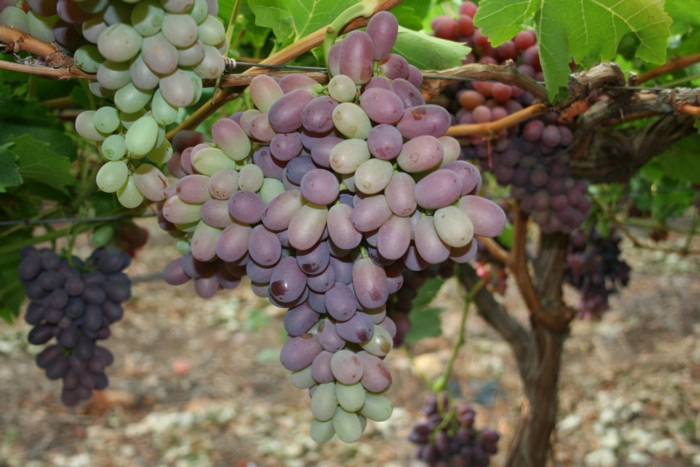
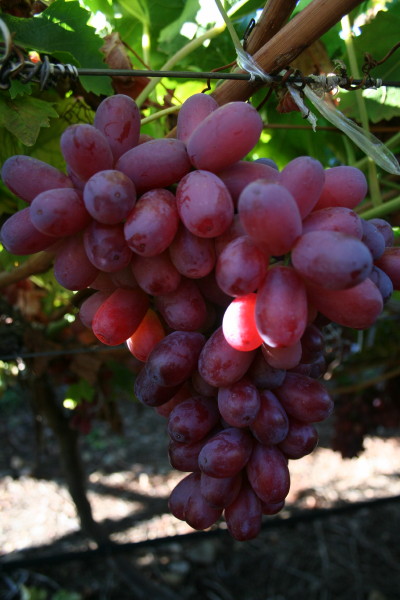
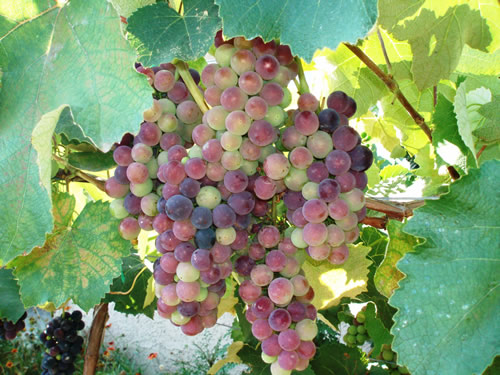
Veraison is when the berries start to soften and turn colour and signal the beginning of the ripening process.  Normally takes place around 40-50 days after fruit set.  The early stages of veraison is where you will notice a dramatic increase in berry size. 


In the Northern Hemisphere, this is around the end of the July into August and between the end of November into January for the Southern Hemisphere.  During this stage the colours of the grape take form-red/black or yellow/green depending on the grape varieties. This colour changing is due to the chlorophyll in the berry skin being replaced by anthocyanins (red wine grapes) and carotenoids (white wine grapes). In a process known as engustment, the berries start to soften as they build up sugars.


Some varieties tends to have poor colour, so opening up the canopy and removing leaves around the bunches, will help colour development. 


Berry maturity:


Many home growers make the mistake of thinking the grapes are ready for harvest when it start

to colour. The colouring of the skin is a good indication that the grapes are nearly ripe enough

to harvest, but not ready yet.


The ripeness of grapes is measured in Degrees Brix (symbol °Bx).  This is a measurement of the mass ratio of dissolved sugar to water in a liquid.   A 25 °Bx solution is 25% (w/w), with 25 grams of sugar per 100 grams of solution. Or, to put it another way, there are 25 grams of sucrose sugar and 75 grams of water in the 100 grams of solution.


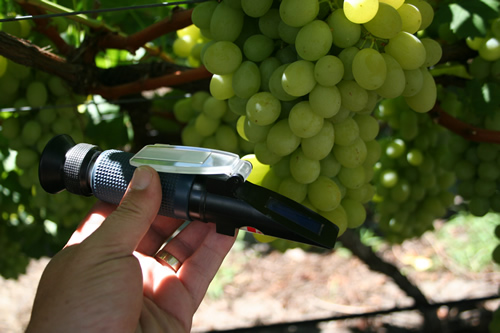
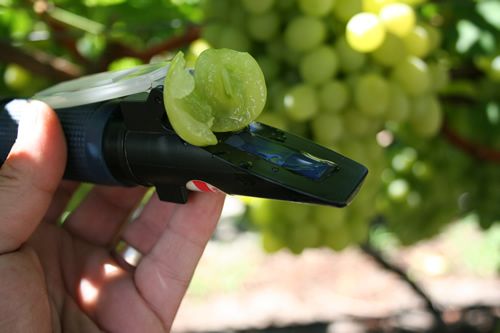
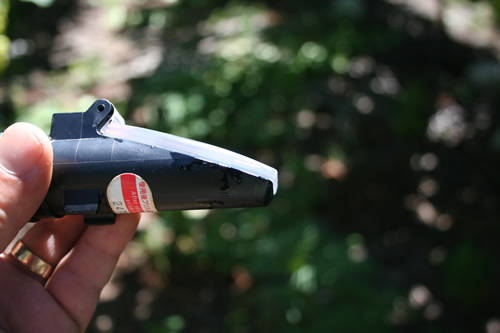
There is an instrument called a refractometer, that measures the sugar levels of the juice squeezed from a few berries. This instrument unfortunately is quite expensive and only if you plan to make your own wine, I would recommend buying one.


Dormancy:


It should be close to winter now, and the leaves of the grape vine will start to change colour and fall off and your grape vine will go into rest (dormancy).  During this time of the year, the grape vine accumulates carbohydrates in the canes, trunk and roots of the vine for the upcoming growing season.


This is the time of the year when the grape vines need to be pruned.  In colder climates, it is best to wait until early spring, before you prune the grape vine.

Remember my friend, for you to be a succesfull grape grower, you need to know what to do in every stage of the development of the grape vine.  Without this, you will have little or no chance of succeeding!

If you need in-depth, but very practical and easy-to-understand guidance, I recommend you join us as a member of the Complete Grape Growing System.  It won’t cost you an arm or a leg!  In fact, it will cost you less than a staked, 5 gallon Flame Seedless grape vine sold on Amazon!

To become a member right now for just $47.95, just click on the button below.  If you are outside the US, you can even pay in your own currency.

Pruning Grape Vines In Cold Climates

This article will shed some light on how pruning your grape vine can help you to escape or prevent early frost from devastating your upcoming grape crop.

It is not question of IF you should prune your grape vine or not; it is a question of WHEN you will prune your grape vine.

As we all know by now (so I hope); pruning is one of the most important manipulation you as a grape grower needs to do.  Without pruning your grape vine the correct way, you simply cannot expect your grape vine to produce healthy, good-looking grapes; even any grapes at all!

One of the main reasons so many grape growers fail to have a proper grape crop, is their ability to prune the grape vine the correct way.  Now, the question I normally get is:  “What will happen if I don’t prune my grape vine.

Without pruning your grape vine, there will be a huge amount of buds that will sprout in spring – having up to 300 buds on such a grape vine is not impossible.  As you can imagine, for a grape vine to produce energy or carbohydrates to feed all of these buds, will put your grape vine under a huge amount of stress. 

This brings us to what I want to share with you in this article. 

It is a known fact that a grape vine under stress, is much more susceptible to cold damage than a well structured and previously pruned grape vine.

Your grape vine will come out of dormancy, once the average temperature outside rise to about 10 to 12 ºC or 50 to 53 ºF or if you prune your grape vine or use rest breaking agencies like Dormex (a chemical used by commercial grape growers to force the grape vine out of dormancy).

In the northern hemisphere, and where spring frost is a problem, cold damage after pruning your grape vine or after the first signs of new shoot development (bud break), can ruin your upcoming grape crop and therefore you need to protect these buds at all cost.


Bud break on grape vines


Except for having a cold hardy variety, one of the best ways to protect your grape vines from spring frost, is the timing of when you will prune your grape vine and how you will prune your grape vines. 

Pruning too early will result in your grape vine to come out of dormancy earlier, and therefore increasing the chances of spring frost damage.  On the other hand, as mentioned earlier, you don’t want your grape vine to go into bud break with too many buds! 

You must be thinking:  This guy must have gone nuts! How on earth is that possible?  I know, but give me a chance to show you a neat little trick you should be doing if you live in an area with spring frost problems.

It is called “brush cut” or “first prune”:

“Brush cut”, is the process of removing all unwanted canes from the grape vines, leaving only those canes that will be later on pruned to cane bearers or spurs.  This should be done before the buds on the grape vines show signs of swelling (normally about 3 weeks before spring, depending on your climate off course). 


During “brush cut”, the number of buds on the grape vine will be reduced significantly and more carbohydrates will be available to the buds on the fruiting canes of the grape vine.  In same cases, when your grape vines grew very vigorously the previous season, the length of fruiting canes can be pruned back as well, making the number of buds on the vine even less, but I suggest you leave the fruiting canes alone and do not prune them.

Now, once spring is on hand, buds on these fruiting canes will start to swell and drop their scale leaves from the end of the cane (bud break will start from the tip of the canes).  The buds on the base of the cane will remain dormant longer, and once the chances of spring frost is over, you simply prune the canes to the desired length (8 to 12 buds for canes bearers and 3 buds for spurs), even if you have to wait until the buds on the base of the cane opened as well.

Because there are only canes left of the vine that will be used to bear fruit, “brush cutting” will take much less time than normal pruning methods.  Just remember one thing; be careful not to damage the remaining buds once you do “brush cutting”, as the scale leaves that protected the buds will be soft and spongy.

This method of pruning will hugely improve your grape vines resistibility to cold damage and could save your complete grape crop! 

Thanks for reading and I sincerely hope that this article will help you in the future.

Take care,

Danie


P.S.:  Did you like this article?  For more expert advice like this,  join The Complete Grape Growing System today and start growing your grape vine like a seasoned PRO!

For $47.95, you get everything you will ever need to know about growing grapes, plus get two pruning videos absolutely free.


Late Harvest Grapes

Hi friends, I hope everyone is settled in, after the holiday season and ready for 2009.  Here in South Africa, we started harvesting our grape crop a week or two ago (at last!).  It looks like a good, healthy crop and we are looking forward to another exceptional quality year.

Talking of grape quality, I want to share a little secret with you that will improve the quality of your next grape harvest - I suppose after this post, it won’t be a secret anymore:-)

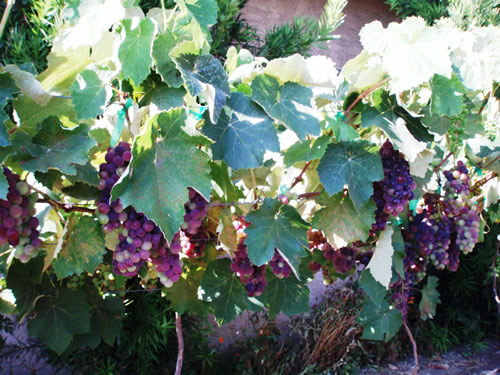
Sam (a members of the Grape Growing System) from the USA send me an email a few weeks ago, asking about these small bunches that appeared late in the growing season in her vineyard.  Her concern was that they are well behind the actual crop (ripen much later) and back then, with the end of the growing season just around the corner, they will not fully ripen - (she managed to grew some awesome grapes I must ad.)

It took some effort to convince Sam to remove these “late harvest” bunches, as they are so lovely to look at.


The reason you should remove these “late harvest” bunches is quite obvious, if you look at it from viticultural perspective.

From what you have learned this far and from what I teach in the Complete Grape Growing System; there is limit to how many grapes a specific grape vine will fully ripen and still produce top quality grapes - off course this depends on your climate, soil, variety and trellis system. 

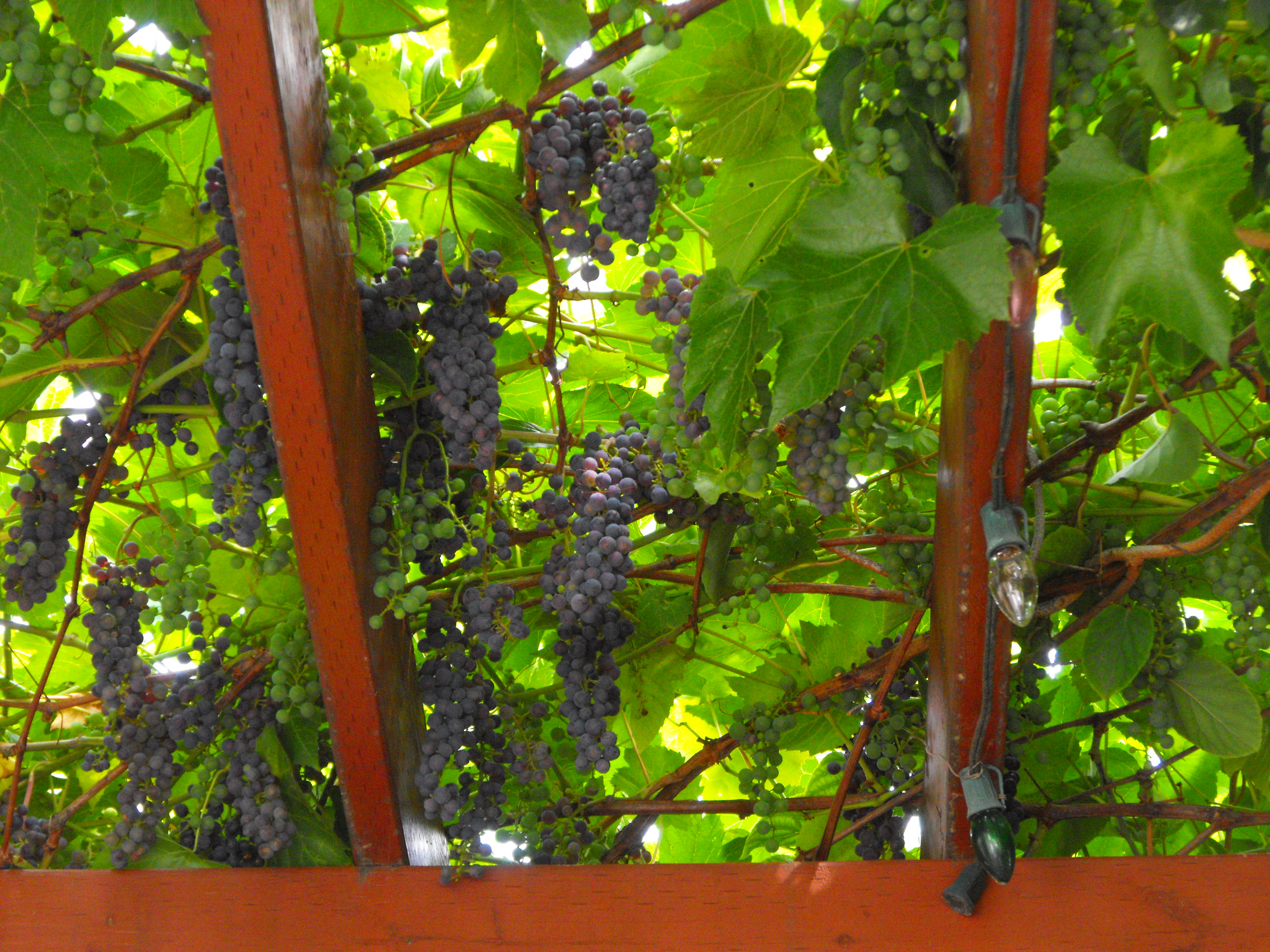
Say for example your grape vine will fully ripen 20 bunches of grapes that will ensure a good berry size and quality grapes, then early in the season, these little “late harvest” bunches normally isn’t counted as they were very small and were “hiding” behind the leaves in the canopy.

Once they get bigger, they will start to compete for food and this will negatively influence the main crop on your grape vine.  I know, the temptation will be there to leave these “late harvest” bunches on the vines, but if you are looking for top quality grapes (as you should), then removing these bunches will for ensure much better quality (size and sugar) grapes.

I found that after harvesting their crop, most grape growers never even bother to remove these bunches from the vines.  What will eventually happen is that these bunches will rot and remain on the vines until late in fall and then fall off.  The question is: “Where do all the fungus spores go to?”  Off course they will remain in the soil and when the temperatures rise in spring and the conditions favour the development of fungus spores, they WILL infect your next crop.

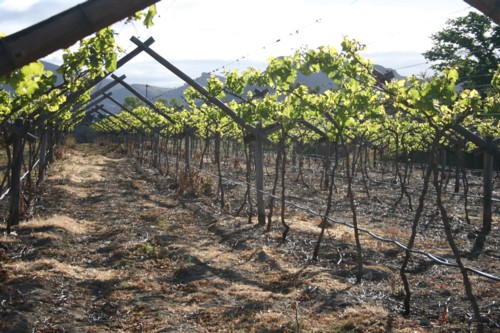
Vineyard sanitation is an unknown and one of the most underestimated practices for most new grape growers.  Infected soil, canes and leaves on the ground are the main sources for problems with gray and black rot in the future - remember this.

If didn’t have enough grapes on your vines, then having a ”late harvest” crop will sooth the soul, but it is important to always remove ALL of the left-over grapes from the previous season.

I hope this tip will improve the quality of your next crop!

Take care, and talk to you soon.

Danie

P.S.:  Did you like this tip?  There is much more to growing grapes!  Come, let me take you by the hand and show you that YOU too can be a successful grape grower.  Join our elite group of grape growers by signing up for the Complete Grape Growing System.

For a once-off payment of only $47.95 you get everything you will ever need to know about growing grapes, plus get two pruning videos absolutely free.