subscribe
Who else wants to learn how to grow grapes? This grape growing blog is your free resource to growing grapes.

pruning grapes

Pruning Grape Vines In Cold Climates

This article will shed some light on how pruning your grape vine can help you to escape or prevent early frost from devastating your upcoming grape crop.

It is not question of IF you should prune your grape vine or not; it is a question of WHEN you will prune your grape vine.

As we all know by now (so I hope); pruning is one of the most important manipulation you as a grape grower needs to do.  Without pruning your grape vine the correct way, you simply cannot expect your grape vine to produce healthy, good-looking grapes; even any grapes at all!

One of the main reasons so many grape growers fail to have a proper grape crop, is their ability to prune the grape vine the correct way.  Now, the question I normally get is:  “What will happen if I don’t prune my grape vine.

Without pruning your grape vine, there will be a huge amount of buds that will sprout in spring – having up to 300 buds on such a grape vine is not impossible.  As you can imagine, for a grape vine to produce energy or carbohydrates to feed all of these buds, will put your grape vine under a huge amount of stress. 

This brings us to what I want to share with you in this article. 

It is a known fact that a grape vine under stress, is much more susceptible to cold damage than a well structured and previously pruned grape vine.

Your grape vine will come out of dormancy, once the average temperature outside rise to about 10 to 12 ºC or 50 to 53 ºF or if you prune your grape vine or use rest breaking agencies like Dormex (a chemical used by commercial grape growers to force the grape vine out of dormancy).

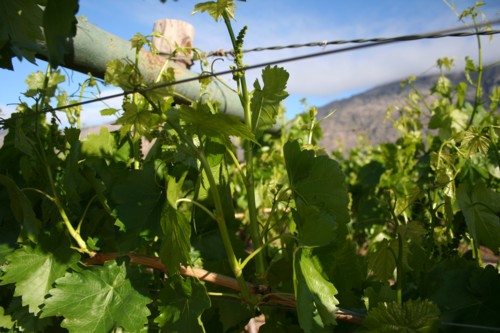
In the northern hemisphere, and where spring frost is a problem, cold damage after pruning your grape vine or after the first signs of new shoot development (bud break), can ruin your upcoming grape crop and therefore you need to protect these buds at all cost.


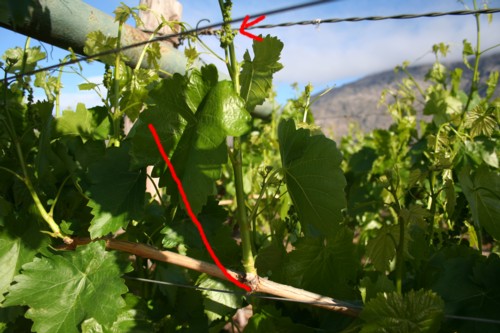
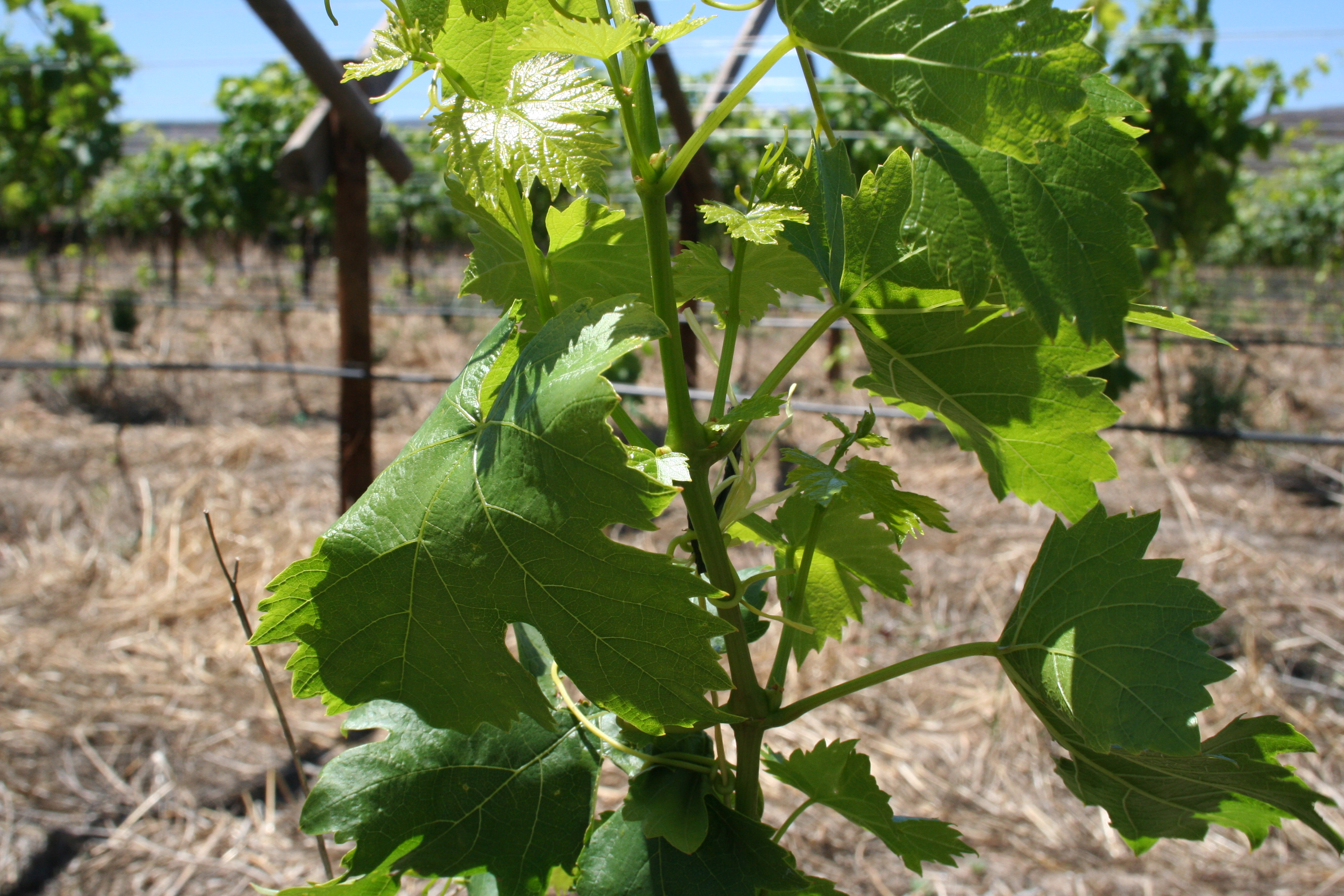
Bud break on grape vines


Except for having a cold hardy variety, one of the best ways to protect your grape vines from spring frost, is the timing of when you will prune your grape vine and how you will prune your grape vines. 

Pruning too early will result in your grape vine to come out of dormancy earlier, and therefore increasing the chances of spring frost damage.  On the other hand, as mentioned earlier, you don’t want your grape vine to go into bud break with too many buds! 

You must be thinking:  This guy must have gone nuts! How on earth is that possible?  I know, but give me a chance to show you a neat little trick you should be doing if you live in an area with spring frost problems.

It is called “brush cut” or “first prune”:

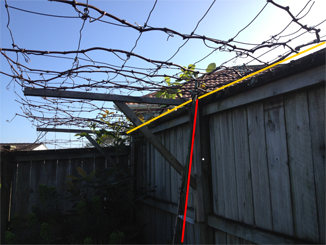
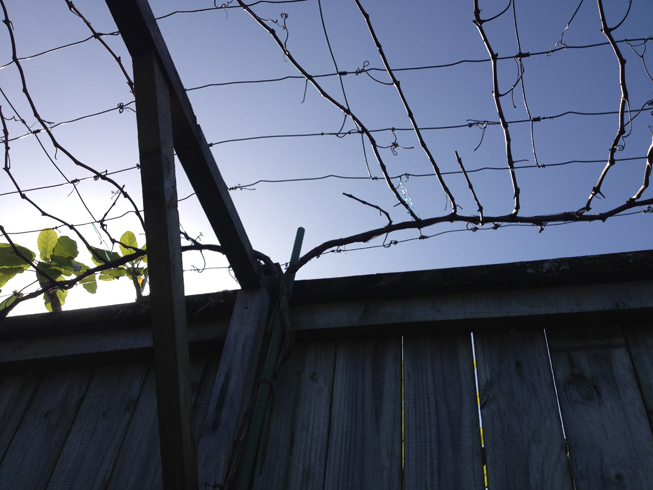
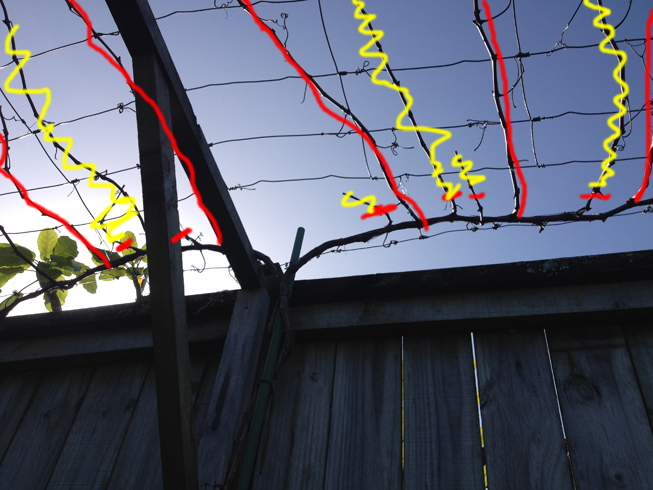
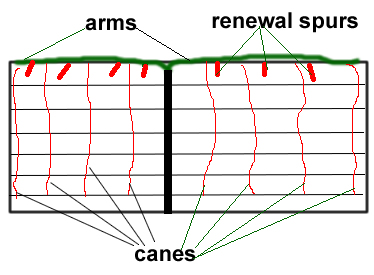
“Brush cut”, is the process of removing all unwanted canes from the grape vines, leaving only those canes that will be later on pruned to cane bearers or spurs.  This should be done before the buds on the grape vines show signs of swelling (normally about 3 weeks before spring, depending on your climate off course). 


During “brush cut”, the number of buds on the grape vine will be reduced significantly and more carbohydrates will be available to the buds on the fruiting canes of the grape vine.  In same cases, when your grape vines grew very vigorously the previous season, the length of fruiting canes can be pruned back as well, making the number of buds on the vine even less, but I suggest you leave the fruiting canes alone and do not prune them.

Now, once spring is on hand, buds on these fruiting canes will start to swell and drop their scale leaves from the end of the cane (bud break will start from the tip of the canes).  The buds on the base of the cane will remain dormant longer, and once the chances of spring frost is over, you simply prune the canes to the desired length (8 to 12 buds for canes bearers and 3 buds for spurs), even if you have to wait until the buds on the base of the cane opened as well.

Because there are only canes left of the vine that will be used to bear fruit, “brush cutting” will take much less time than normal pruning methods.  Just remember one thing; be careful not to damage the remaining buds once you do “brush cutting”, as the scale leaves that protected the buds will be soft and spongy.

This method of pruning will hugely improve your grape vines resistibility to cold damage and could save your complete grape crop! 

Thanks for reading and I sincerely hope that this article will help you in the future.

Take care,

Danie


P.S.:  Did you like this article?  For more expert advice like this,  join The Complete Grape Growing System today and start growing your grape vine like a seasoned PRO!

For $47.95, you get everything you will ever need to know about growing grapes, plus get two pruning videos absolutely free.


Summary of how to grow grapes in your backyard

History of grape growing

Drinking wine is a pleasure that has been enjoyed since almost 4000BC. The science of viticulture, or grape cultivation, began with the need to domesticate wild vines. Viticulturists needed to breed domestic plants with higher fruit yields, since wild grapes invest little energy in fruit production. Wild grapes were also dioecious, meaning that there are male and female versions of the plant. Early viticulturists selected a rare mutant vine with perfect flowers (that is, functional male and female components) to ensure all their vines bore fruit. Today many varieties of common species of grapes are cultivated and used for wine production.

Soil preparation

It is important to carefully select the planting site. Grapes can grow in a wide variety of soil types and pH ranges, certain conditions induce better growth and yields. First, grapes prefer well-drained and slightly acidic soil. The best pH is typically between 6.0 to 6.5, but grapes will grow in soils with pHs ranging from 5.5 to 7.5. If your soil is a little basic, you can add in sulfur or ammonium sulphate to decrease the soil pH. Ideally, grapes should be planted on a south-facing hillside, although in a home garden you may not have this luxury. You should choose a site in your garden that receives full sunlight – grapes do not like the shade. You’ll need to ensure that the soil at your selected site is worked over well before planting to remove any perennial weeds. Addition of peat moss or manure to the site will also help to improve soil quality.

Planting methods

The way you plant your grape vines is really important for their health and productivity. Vines need to be planted approximately eight feet apart in rows that are between eight and ten feet apart. If you are planting on a sloped site, ensure that the rows run perpendicular to the slope. If your site is exposed to a strong prevailing wind, orientate your rows in the direction of the wind to minimize damage.It’s preferable to choose one- or two-year-old, dormant, bare-root vines from a reputable provider. Soak the roots of the vines for several hours prior to planting. When planting, ensure that the hole is slightly larger than the root system of the plant and that the vines are set at a depth equivalent to the one they grew in at the nursery. If your vines are grafted, ensure that the grafting union is approximately two inches above the soil. Once you have planted the vines, you’ll need to remove all but the most vigorously growing cane and cut this back to just one or two buds.

Training your grape vines

To facilitate cultivation, harvesting, pest control and to maximize yield, grapes are trained to a specific system. There are many different training systems, however the single curtain and four- or six-cane Kniffin systems are most suitable for home gardeners. The four-cane Kniffin system trains four fruiting canes to two trellis wires whilst the six-cane Kniffin system trains six canes to three wires. The six-cane system is best for less vigorous grape varieties. Using the single curtain system, the main trunk of the vine is attached to a horizontal wire approximately six feet above the ground. Two cordons (extensions of the main trunk) grow along the wire to the left and the right of the trunk, with five or six fruiting canes on each cordon.

Pruning your grape vines

Annual pruning of your vines will be necessary to ensure optimum yield and sufficient vine growth to produce next year’s crop. The best time for pruning is late Winter or early Spring, during the vine’s dormant phase. You’ll need to keep a few things in mind when pruning; fruit is borne on one-year old canes, the most productive of which are between 0.25 and 0.30 inches in diameter. The most productive buds occur in the middle of the cane, so it is best to prune canes to between eight and 16 buds. New farmers may find the advice of an experienced viticulturist helpful.

Harvesting your grapes

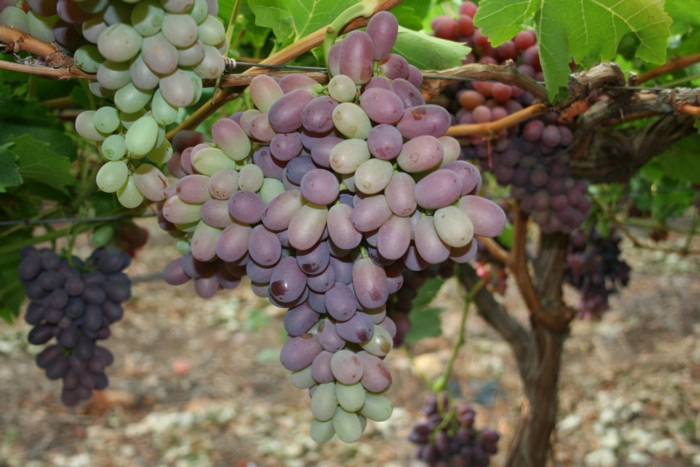
Harvesting should occur when the grapes are fully ripe. Color isn’t always a reliable indicator of maturity, so taste-testing is essential! Cut the grape clusters from the vine with a sharp knife and handle the grapes by their stems. Grapes do not handle or store well, so enjoy the fruits of your labor as soon as possible!

This is only a summary of how to grow grapes. For a more complete and much more helpfull explenation of how to really sky rocket your grape crops, you need the get YOUR copy of the Complete Grape Growers Guide – Click Here

Have a grape day

Danie

The Grape Guy

http://www.my-grape-vine.com