
How to use a refractometer when growing grapes
Refractometer is an instrument that measures the sugar content of grapes.
With this post I will show you how to use a refractometer.
I hope you are having a wonderful week!
With this article, I want to reply to an email I received from Suzanna, one of the subscribers of My Grape Vine. Suzana became a member way back in 2007 when I first started the website and blog and established a great looking vineyard. Her question is about the use of a refractometer to determine the ripeness of grapes.
With the help of the Complete Grape Growing System, Suzana and her friends at St Mark’s Presbyterian Church will be collecting the fruit of their labor soon!
To listen to an interview with the ladies, just click on the link below
http://www.stmarkspresby.org/archive/032509_ladiesvine.html
Well done ladies!
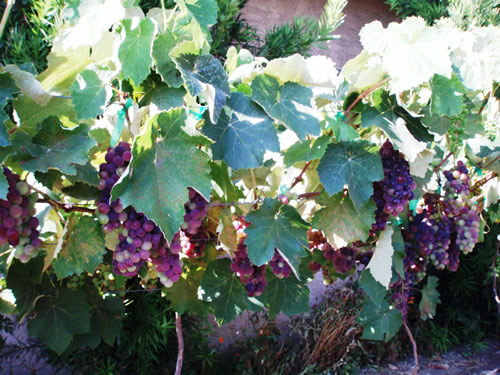
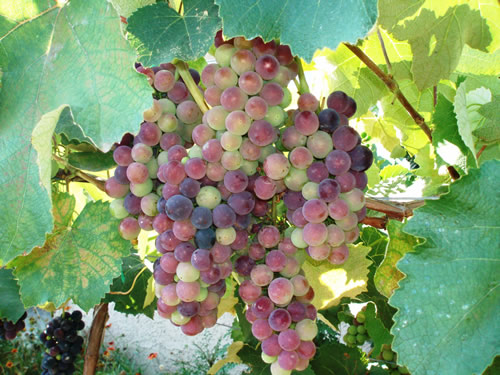
Now, Suzana is thinking of buying a refractometer to help them determine the ripeness of their grapes, but she is not sure how to use a refractometer.
Okay, so before I tell her how to use one, I am sure there are some readers that don’t know what a refractometer is and how it works.
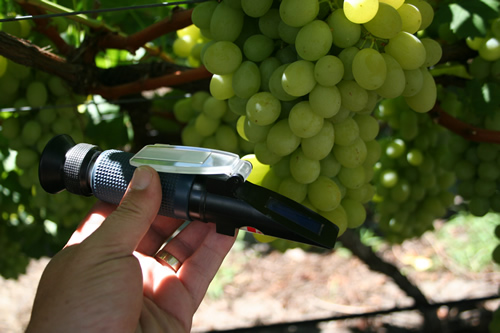
A refractometer is an instrument that measures the amount of sugar in an aqueous solution. There are various models available on the market – from a digital refractometer to the traditional analog one’s. It works on a basis of critical angle principle where light goes through a lens and prism in the refractometer, projecting a shadow on a glass reticle inside the instrument.
Without getting too technical – A sample of grape sap is pressed out on the prism of the refractometer and covered with the cover plate (the small perspex like thing on top of the refractometer).
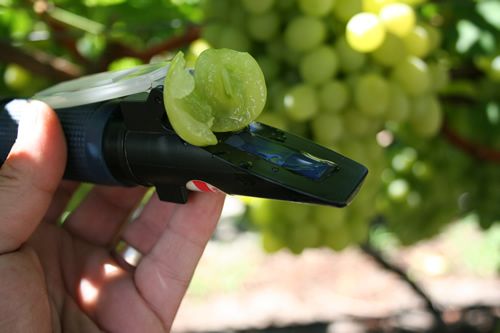
USING THE REFRACTOMETER – VERY IMPORTANT
Ensure that there are no solids, like pips on the prism of the refractometer when you close the cover plate, otherwise it will break and you can throw away the refractometer.
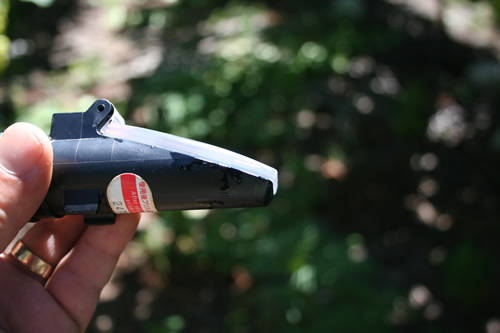
The amount of sucrose in the sap, either reflects the light or pass it through the prism, and then shines the amount of light coming through on a scale inside refractometer.
IMPORTANT: Because temperature plays a big role in this process, it is advisable that you get a refractometer that automatically compensate for the difference in temperature. Although they are a bit more expensive, I really do recommend you get one of these refractometers . For those who buy from Amazon.com, here is a link where you can order yours online –
Hand Held refractometer with Automatic Temperature Compensation

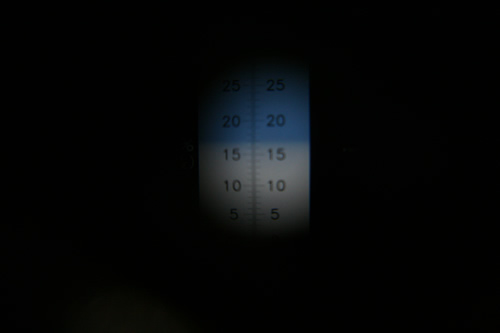
When looking through the eye-piece of the refractometer, you will see a white and blue (some black) area on the scale. The line between these two areas on the scale is what the sugar contents of the sap is.
This scale is measured in Brix (°Bx)- 1 degree Brix corresponds to 1 gram of sucrose in 100 grams solution. In the picture below, the reading is just below 17 on the scale. This means that there are +- 17 grams of sucrose in every 100 grams of sap. In other words; the higher the number, the more sugar there is in the sap.
Now, the question is: At what Brix reading should I pick my grapes?
Mostly, it depends on what you will do with your grapes. For making wine, a reading of 22 and above is the best as this will ensure enough sugar for good fermentation and flavour. As for eating, I would say round about 17 to 19 degrees is more than enough.
The problem when waiting too long for the Brix reading to get higher, is that the berries become softer and loose it’s crispiness and chances of rotting becomes bigger as the sugar increase as well.
The old trustworthy method of tasting the grapes alongside using the refractometer, will help you decide when to pick your grapes.
I hope you enjoyed this article about using a refractometer and you will now know how to use one.
Take care and enjoy the rest of the week.
Danie
Find out why Suzana and thousands of other grape growers are successful
Join the The Complete Grape Growing System right now.

The Complete Grape Growing System is an online product. All the grape growing info I have will be at the tips of your fingers within 5 minutes from now.
You will not receive any physical product with your order.
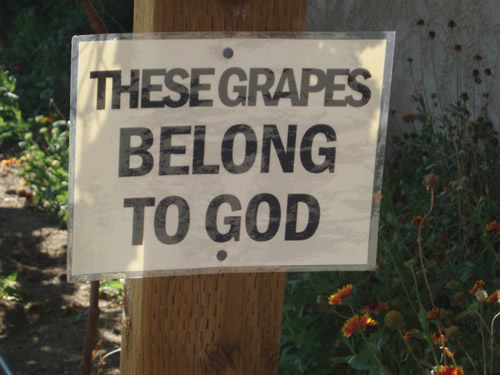
Suzana had some trouble with kids picking their grapes before they are ready. Here is a sign she put up in her vineyard – LOL 🙂
Loved it …….
Tagged with: how to grow grapes
Filed under: growing grapes • how to grow grapes
Like this post? Subscribe to my RSS feed and get loads more!
