subscribe
Who else wants to learn how to grow grapes? This grape growing blog is your free resource to growing grapes.

Archive for October 2008

Replanting A Grape Vine

Because so many grape growers ask this question, I though it would be a good idea to write this article as part of the “New To Growing Grapes” series of posts on my blog. 

The reason why so many new grape growers replant their grape vines, is poor planning, incorrect soil preparation and choosing the incorrect site or spot to plant their grape vines in the first place. 

Choosing the correct site location for your vineyard, is one of the most important choices you as a new grape grower have to make as this will be the future home for your grape vines in years to come.


I will not go into site location and soil preparation for your grape vines in this article, but you can get all the information for free by joining the Grape Coaching Program.  The silver membership is a 10 day trial-run of what you can expect from the Grape Coaching Program


Let’s get something straight; replanting a grape vine is not ideal, especially if it is older than two years.  Therefore you need to do proper planning before you establish your vineyard.

So, your grape vines were not planted in the right spot or you are moving to another house and wants to take your grape vine with you – now what?


Transplanting a grape vine pose some risk, there is no doubt about that, but it can be done if you follow the instructions I am going to give to you now.  Do not deviate from this too much as you could loose your grape vine.


The first problem with transplanting an old grape vine (2 years and older), is that the root system and structure of the vine gets bigger each year and makes the removal of the vine much harder.  When transplanting these grape vines, you will eventually damage some roots, as it is impossible to take them out of the soil intact.  Damaging the roots of the vines will result in the lost of moisture through the wounds and could result in the roots drying out too much and die.  When taking the vines out of the soil, make sure you dig up as many of the roots as possible – the more roots you can save, the more successfully you will replant your grape vines.


The second problem with replanting a grape vine, is the loss of water through the leaves (evaporation).  After replanting the grape vine, the roots of the vines are in a state of shock and for a week or two will not be able to take up water from the soil.  If the climate is hot, the grape vine will loose water through the leaves which will result in too little water in the vine and the leaves will start to wither.

You therefore need to minimize the apical growth in order to ensure there is enough available water in the vine itself by reducing the number of shoots to a maximum of three.  I would recommend you prune back hard and leave only one strong cane from the base of the lowest cordon.  You can develop the new structure of the vine from there.  Rather loose one or two year’s growth and have healthy vine, than trying to retain the old structure and have a dead vine!.


The third problem is planting and watering the vine.  Because you have a much bigger root system than a normal rooted cutting, you will have to make a much bigger planting hole.  Make the planting hole large enough to accommodate ALL the roots and do not prune back any roots to fit the planting hole – rather make the hole larger.

It is important that you understand, that these vines needs allot of water the first few weeks (as explained before).  After removing the vine from it’s old position, place the roots of the vines in a bucket of water for at least six hours, prior to planting it in the new location.  This will ensure the roots stay moist and the vine will not loose any water through the wounds on the roots.


Do not put any fertilizer in the planting hole, it will damage the roots.


I have successfully transplanted 5-year-old vines this way, and there should not be any reason you cannot do it yourself, but it is always better to avoid replanting a mature vine.


I hope this gave you more insight on how to relocate a mature vine – remember, the key to successfully replanting a grape vine is:

  • Keep as many of the roots as possible,
  • Minimize apical growth for at least a month
  • Make a large enough planting hole
  • Keep the vine well watered.


Good luck

Danie


Get your copy of the Complete Grape Growers Guide today!

Growing grapes has never been this easy! 


Update on layering a grape vine

In the previous post, “Layering A Grape Vine“, I showed you how to layer a grape vine.  As your grape vine starts showing signs of new growth, you need to manage these layers in order to maximize the shoot growth of the new grape vine and to develop the frame work (cordons) of the new as quickly as possible.

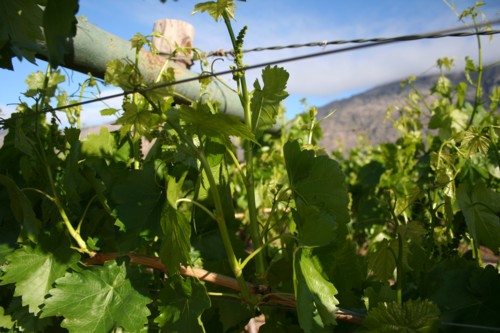
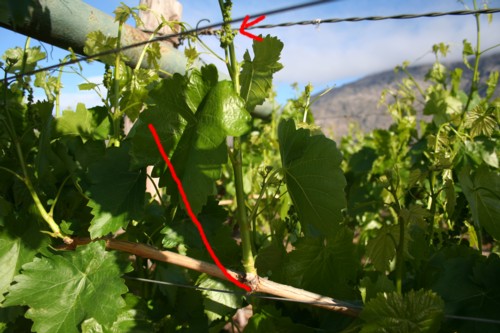
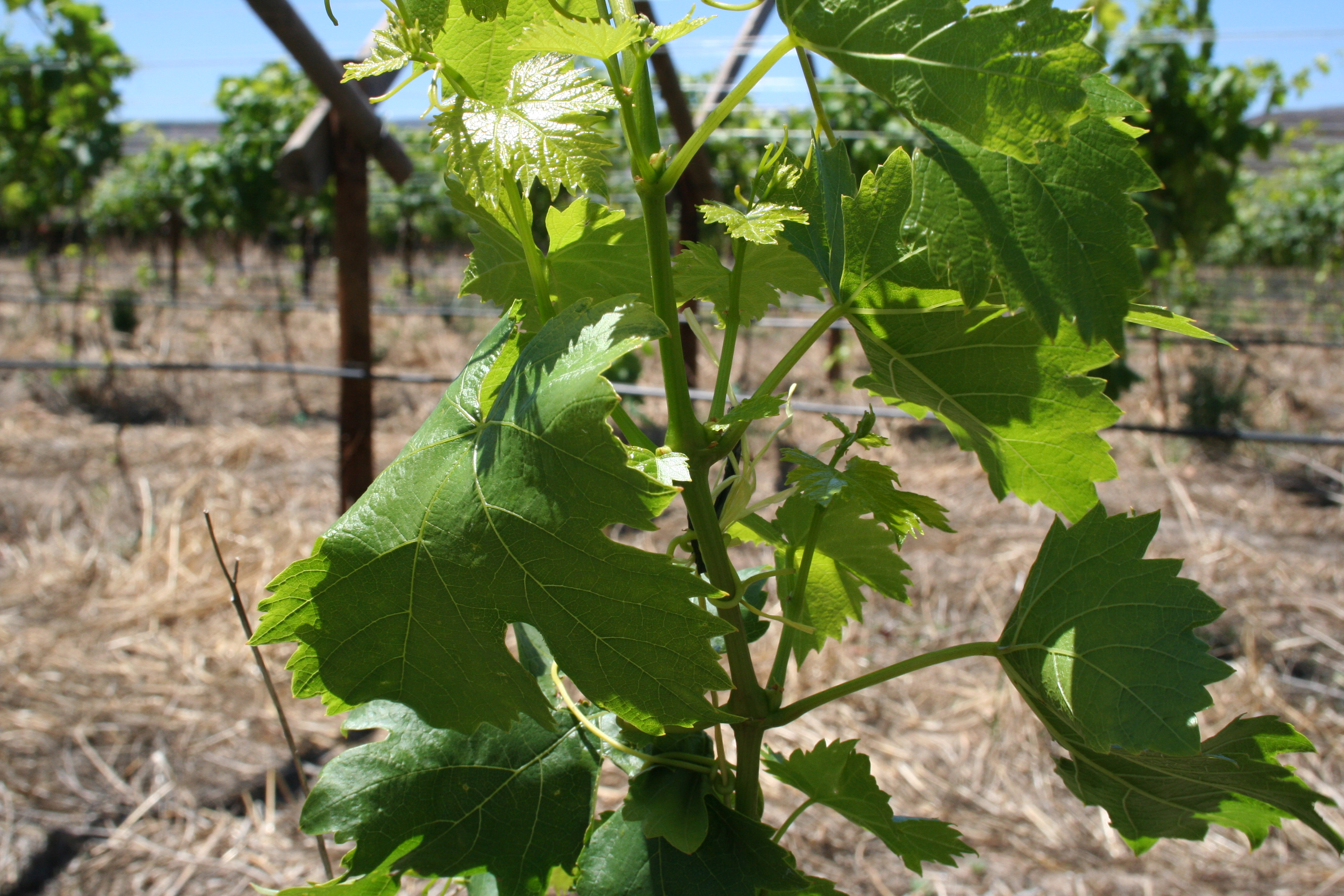
This is what the new layer looks like after just a few weeks.

When the new shoots start developing from the buds on the cane you layered, you should remove them as soon as possible.  This is a very simple process; just break them off by hand. 

For those of you who has the Complete Grape Growers Guide;  keep an insurance shoot and new training shoot as shown in the guide and train them up the training string as the pictures in the e-book shows you.  Once the vine reach the trellis wires, you can split it (if your training system requires it) or simply train it to the cordon wires and start developing the frame work (as shown in the guide).

You will notice that a training shoot from a layered grape vine grows much faster than from a newly planted cutting.  This is because it gets energy and nutrients from the original (old) grape vine.

I do hope this will help you manage your layered grape vine. 

Take care

Danie

P.S  For your own copy of the Complete Grape Growers Guide, you can simply click on the picture below.

Click Here To Order Your Copy For Only

You can use your PayPal account to buy the e-book!

This is an e-book that gives you instant access to all the information.  You will have to download the ebook after you make the payment, so you will NOT receive a physical book.

The Importance Of Oxygen In The Soil When Growing Grapes

In the previous blog (Watering grape vines) we spoke about what instruments you can use to determine the amount of water needed by the grape vine.

As mentioned in the article, you should maintain a good balance between the amount of water and oxygen in the soil, to ensure proper root development.  In this article, I want to discuss this point in more detail.

Soil is made up of both organic and inorganic substances. 

The organic matter consists of the decomposing rests of plants and animals and with and ideal soil temperature and moisture levels, the soil is inhabited by earthworms, insects and fungi. 

These living organisms, along with other plants, feed on the organic matter in the soil, that will in the end create humus and soluble nutrients.   This biological cycle continues as long as there is moisture and oxygen present in the soil.  This decomposing matter aerates the soil by occupying the gaps between the inorganic soil particles, increasing its water holding capacity.

The inorganic particles of soil are named by the size of the particle; sandy soils have the largest particles and clay, the smallest particle.

The moisture/water in soil from irrigating your vineyard will penetrate the soil through cracks and gaps between the inorganic particles in the soil.  This process will push the air out of the soil as air and water cannot use the same space.  Plant roots need oxygen to breathe and without the presence of enough oxygen, they plant will drown.

As the organic material decomposes, it will release carbon dioxide, which replaces some of the oxygen. The water in the soil dissolves the carbon dioxide, forming a weak acid, which, by reacting with the minerals in the soil forms compounds that the plants can use as food.  Therefore, oxygen is needed in the soil!

Plants also need nitrogen, which they cannot get directly from the atmosphere.  A complex process called nitrification takes place to make nitrates available to the roots of the grape vine – this is a vital stage in the nitrogen cycle.  As you can imagine, without air in the soil, this process cannot take place.

Plants also use oxygen for the respiration processes in their cells, which are the main source of energy for the plant – their metabolism running.  Grape vines are not very well adapted to withstand too wet conditions for prolonged periods of time; so over watering your grape vine in fact halts/slow down the metabolism of the grape vine.

Remember, when you plan your vineyard, it is good practice to correct the drainage and organic content of the soil, BEFORE you plant your grape vines. 

New To Growing Grapes | Watering Grapes


How much water is enough?” or “How often do I need to water my grape vine?  is one of the most asked questions by home grape growers.  This is also one of the most difficult one’s to answer, because there are so many outside factors that will play a major role in deciding how long and how much to water your grape vines. 

Factors like your climate, soil type, soil drainage, wind speed, rainfall, topography of your vineyard, quality of the water, the irrigation system you use and even the canopy size of your vineyard will influence how much you will water your grape vine.  I’m sure you will understand, that for me to tell you exactly how often to water a grape vine, is very difficult.  I can only give you an estimates, but you need to experiment and test how much is enough.

To give you an example; during last years’ growing season, one of my friends called me to ask how much I water my Thompson Seedless grapes.  I told him the frequency and duration of my irrigation schedule, but decided to go and visit him.

When he took me to his vineyard, I immediately noticed that his soil type was totally different from mine (more sandy), his vineyard was ridged because of impenetrable sub-soil layers (ridging will cause water to evaporate more, because of the greater soil surface) and his row spacing also differed from mine.  I advised him (or should I say we came to an agreement) that he needed to water his vine more frequently but for shorter periods of time.

In the end, he nearly gave the same amount of water as I did, but his scheduling was very different from mine – by the way, he had a great crop that year.

Increasing the efficient usage of water in vineyards should be the goal of every grape grower on planet earth, as water is becoming more scares each year – global warming??  Therefore, the correct timing of irrigation and application of the correct amount of water are important to maximise crop production and irrigation efficiency.

Let’s look at what tools you can use …

Measuring available soil water in vineyards:

Class A evaporation pan:


Class A Evaporation pan, is cylindrical with a diameter of 47.5 ” (120.065 cm) and has a depth of 10 ” (25.4 cm). The pan is mounted on a level, wooden base and is often enclosed by a chain link fence to prevent animals drinking the water from the pan.

The Class A Evaporation pan measures the amount of evaporation (the process by which water is converted from its liquid form to its vapour form) that took place during a single day as the depth of water (in inches) evaporates from the pan. The measurement day begins with the pan filled to exactly two inches (5 cm) from the pan top. At the end of 24 hours, the amount of water to refill the pan to exactly two inches from its top is measured.  Off course nowadays, there are fully automatic systems available, that takes the readings, store it in a database or even send the it via cellular phone to the farmer – it even refills the pan by itself!

Anyway, the measurement you take from “reading” the amount of evaporation is then used to calculate the evapotranspiration from the soil, grape vines and cover crop.

Tensiometers or Irometers:


A tensiometer is an instrument that reads the soil water potential (the direct energy needed or availability of soil water to the plant) and consists of a porous ceramic tip (cup), connected through hard plastic tube to a vacuum gauge – they come in different lengths.   The tube is filled with distilled water and sealed at the top.

The tensiometer is placed into the soil, in the root zone of the grape vine – the porous tip, acts kind of like a root.  When the soil dries out, the pressure on the outside of the tube will decrease and an imbalance between the inside and outside of the tube will occur.  In order to equilibrate the pressure, water will move from the tube, through the porous tip into the soil.

As the water moves from the tube into the soil, it will cause a vacuum inside the tube and the vacuum gage will show a reading in bars or kilopascal.  Off course, when you water the vine again, the pressure inside the tube will be lower than on the outside and water will move through the porous tip, back into the tensiometer, lowering the reading again.

On the gage, 0 = fully saturated soils and 100 = extremely dry soil.  One big disadvantage of using a tensiometeres is they need constant servicing as air is extracted from water under tension and becomes trapped within the tube, reducing the response time progressively until the instrument fails to operate.


Diviner 2000:


The Diviner 2000 is a portable soil moisture probe, designed Sentek in Australia.  At each site, a probe tube is installed into the soil and when you want to take the readings, simply slide the probe down the tube, into the soil.  The encapsulated capacitance sensor then measures the soil water of the root zone at different depths.  The data is transmit to a handheld logger, which shows graphs of the available water in the soil.  You can also connect it to your PC and download the data.  With the software provided, it draws graphs of water usage at different levels, making irrigation scheduling much easier.


DFM Probes:


I started using these probes last year, and must say, it is AMAZING what you can do with it!  The DFM Continuous Logging Probe is a multilevel soil water content and temperature logging device.  The progressive, newly upgraded probe takes readings on 6 depths and at hour intervals and stores it locally for up to 60 days. Data can be downloaded to a mobile logger or to a central computer with the use of 1.2km long distance radio model.

In other words, you don’t have to visit the site where the probe is installed if you have a radio model!  On my farm, the sites where the probes are installed is relatively far apart, so this makes the job much easier.  You can visit their site at http://www.dfmsoftware.co.za.

Practical tips for the home grape grower:


Even with all of these instruments (and there is hundreds more on the market) to our disposal, you should always physically test your soil water level.  You can do this digging a hole 2 feet away from the vine, about 2 to 3 feet deep – this is where most of the roots of a grape vine situated.

From the bottom of the hole, take some soil in your hand and press it as hard as you can …


If you open your hand and the soil particles stick to each other like a mud-pie, and you feel your hand getting colder (transpiration of water), you know there are still free soil water available in the soil.


If the soil kind of crumbles after opening your hand, and you feel no transpiration of water, then most of the time, your soil is to dry and you need to water your grape vine.


With the help of the above instruments and physically testing the soil this way, you can easily build knowledge of how wet your soil really is when say for example a tensiometer reading is 30 cu.  I do advise you to do regular physical tests.

I hope this article will help you water your grape vine more efficiently in the future.  Remember, a too wet soil has too little oxygen needed for normal root functions – grape vines hate wet feet!