subscribe
Who else wants to learn how to grow grapes? This grape growing blog is your free resource to growing grapes.

Archive for September 2008

Layering Grape Vines

In this article I want to share a neat little trick grape growers use to propagate new grape vines in established vineyards.

If you have ever tried to replace dead or weak grape vines in an established vineyard, I am sure you will agree that is a daunting task.  You normally struggle to get these new vines to the trellis wires because of competition for food and water and because of over shading from the existing vines in the vineyard.

Although it is always advisable to try and replace dead vines with new ones, there might be times when you don’t have new vines or if you failed to grow a new vine, then you can use a simple method called “layering”.

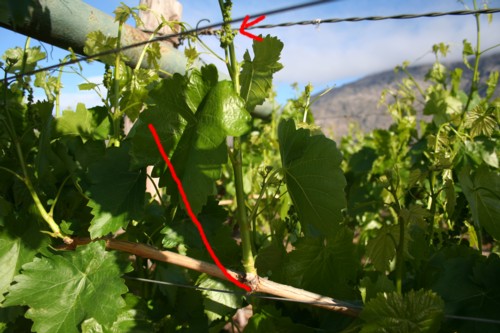
Layering is done in the dormant season, when you prune your grape vines.  All there is to layering, is to make a new planting hole where you want to establish the new vine and then take a cane from the existing vine, bend it down towards the ground and loop it inside the planting hole for about one foot and then up again.   To keep the cane in place, before you fill up the planting hole, you can put a stone on the cane and then cover it with soil.

layerd grape vine

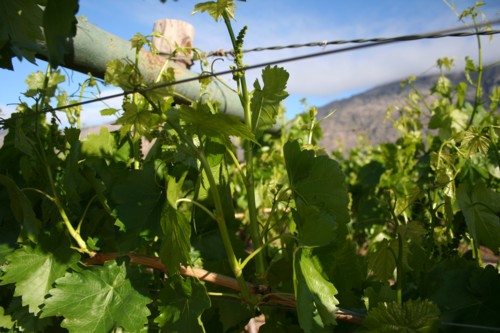
In the following picture you can see new shoots starting to develop from the layer!

New shoots from layerd grape ivne


From there you train the grape vine exactly as if it is a newly planted vine.  During spring, new shoots will develop from the buds on the layer.  If you have the Complete Grape Growers Guide, then train a new training shoot exactly as I show you in the guide. 

Anyway, roots will develop from the buds that are buried under the soil and your new vine will get its food from the existing vine, until the roots of the new vine are strong enough to support the grape vine.

After a year or two, some growers remove the part that is coming from the existing vine, but I prefer to keep it until I am sure the new grape vine is well established and producing a crop.

The disadvantage of using layering is that your new vine will have no rootstock and could be more susceptible to soil diseases like Phylloxera and nematodes – off course it depends on how susceptible your variety is to those diseases.

New To Growing Grapes – Disease Control On Grapes

Hi grape growing friends, here is a further update in the series of “New To Growing Grapes” and this time we will talk about disease control on grapes.


I am sure most of you who grow grapes, have some time or another come across some kind of disease on your grapes.  Not knowing what to look for and when to expect diseases like powdery mildew and downy mildew infections, it’s the reason why so many people fail to have any grapes on their grape vines!


Not only fungus diseases, but also bacterial diseases and insects on your grape vine, will directly influence the quantity and quality of your grapes and because not many grape growers know the symptoms of these diseases, most of the time they wait too long to take action.


The problem is; when you can clearly see the symptoms of diseases on your grape vine (on the shoots, leaves and grapes), it is often too late and 70 % of the damage was done!  Therefore, it is better practice to take precautionary measures, than to try and solve the problem when it is visible.


Grape vine canopy management to control diseases:

Controlling diseases and insects starts with a proper canopy management and grape vine manipulation in conjunction with a sound and ongoing occurring spray program.  Those of you who owns the Complete Grape Growers Guide, will recall how often I mention sunlight penetration and airflow into the grape vine and the importance of a well balanced grape vine.


Most fungal diseases need humid, hot condition and the existence of free water to spread; therefore grape vine canopy management is of the utmost importance when you grow grapes.  Proper airflow and sunlight into the vine will help to reduce the time it takes for grape vines to dry off after heavy dew or unwanted rain and therefore reducing the time the fungus has to develop.


Controlling diseases on grapes is much harder in tropical climates, because the higher humidity and rainfall in those areas, will make the inoculation and the spread of fungus diseases much quicker.  Canopy management in these areas is critical!


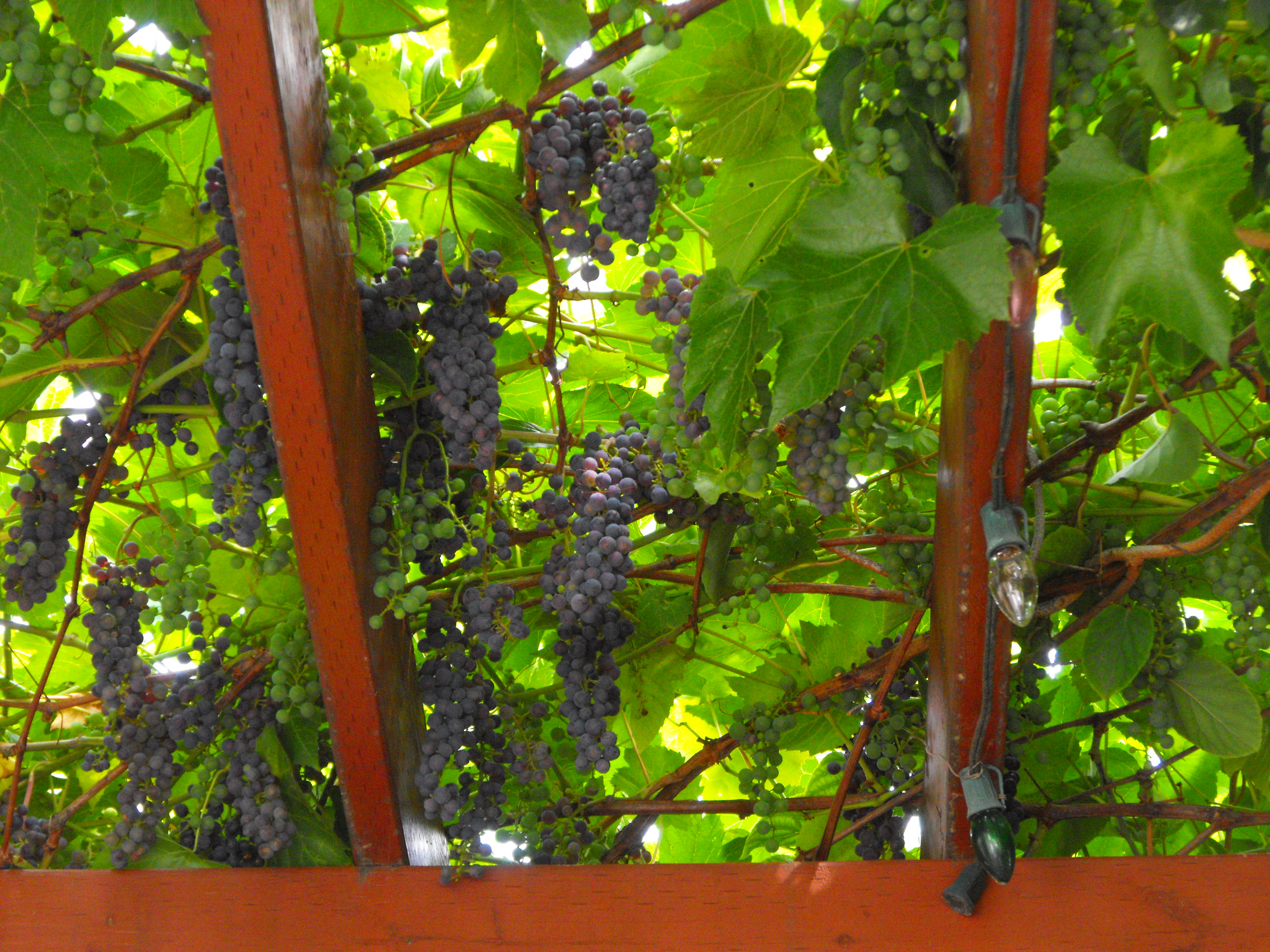
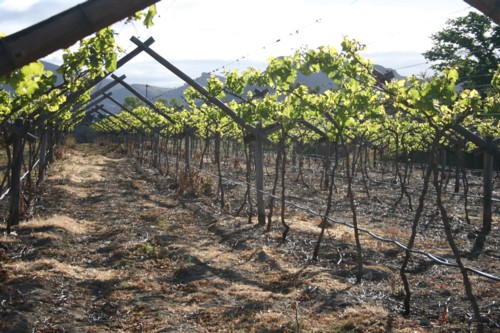
Another cultural practice to help control diseases of grapes, is a properly set up trellis system.  The trellis I use on my farm (the gable trellis system), allows the grape vine to spread its shoots and cover the whole canopy area, making the grape vine less compact – better airflow and sunlight penetration!  If you plan to start a vineyard, choosing the right canopy system is VERY important.


Resistance of grape varieties:

It is a known fact that some grape species and even some grape varieties are more resistant to diseases than other.  Take for example muscadine grapes (Vitis rotundifolia), it is a native grape species found in the southeastern United States and grows wild throughout North Carolina. 


Although Muscadines are not nearly as productive and lovely to look at, as V. labrusca or V. vinifera, it can survive in areas where other grape species will never survive!  Note I use the word:  “can”.  Planting or growing muscadines will not safeguard your vines completely free from diseases, but it can help if you live in an area with high humidity and unpredicted (unwanted) rain.


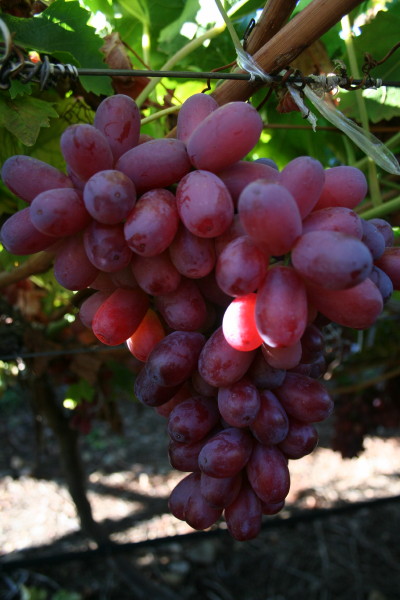
Another example is Flame Seedless and Crimson Seedless – two very popular varieties throughout the world.  I grow both of these varieties my self and I can tell you from experience, that although both are red seedless, V. vinifera varieties, Flame Seedless is much more susceptible to berry rot and berry crack after rain, than Crimson Seedless is.  On the other hand, Crimson Seedless is more susceptible to powdery mildew than Flame Seedless is.


As said in an earlier blog post, you need to carefully choose the variety you will grow in your climate and/or area and I hope this article gave you some tips when you are new to growing grapes or if you are planning a new vineyard.


Remember one very important thing:  


DISEASE CONTROL STARTS WITH PROPER GRAPE VINE CANOPY MANAGEMENT!

Take care and good luck.

Danie


Growing grapes from seeds

As I mentioned in the previous post, I will do a series of posts about questions new grape growers ask.

Today I want to discuss another question asked by so many grape growers: “Can I grow grapes from seeds?”

Because it is very hard to get hold of planting material or cuttings, in some parts of the world, grape growers are forced to try and grow grapes from seeds extracted from the grapes they buy in supermarkets or grocery stores.

Growing grapes from seeds is not the ideal way of reproducing a grape vine as the genetics of a variety is not completely carried over by the seeds – in other words, if you plant a Concord seed, and you successfully get the seed to germinate, the chances are good that the new grape vine will not have all the true Concord characteristics!

This is a very time consuming process as it can take up to three years to propagate a new grape vine from seeds.

Another big problem with growing grapes from seeds is the fact that a very low percentage of the seeds will germinate.  The grape seed is covered with a very tough seed coat that keeps the seed dormant until ideal conditions for germination.  The seeds from grapes, needs to go through a process called stratification to obtain a higher germination percentage.

Stratification of grape seeds:

The stratification or cold treatment of grape seeds is essential if you want to succeed with growing a grape vine from seeds. 

After extracting the seeds from the berries, you need to put the seeds in peat moss or damp paper towel, inside a refrigerator for at least 2 to 3 months.  The peat moss must be kept damp throughout the whole process, but not too wet (soggy).  The ideal temperature for stratification is 35 – 40 ºF (1 – 3 ºC) and should be kept at this temperature throughout the whole process.

Grape seeds can be held in stratification for a long time (even years), as the seeds will not germinate under these cold conditions.

Planting out the seeds:

After stratification, take the seeds from the refrigerator and plant them in seed pots and ensure the temperature is about 70ºF (20ºC) during daytime.  If your climate is cold, you can use heat mats to increase the minimum temperature.  Heat up the seed pots at night if your temperature is lower than 15ºC.

After a few weeks (if you are lucky), then some of the seeds will germinate.  After the seedling is about 1 – 2 inches high, it can be planted out in a bigger pot.  Make sure you keep the soil moist, but not too wet.  It is advisable to grow the seedlings in the pots for a full year, before planting them out.

If you have successfully grown grapes from seeds, let us know about how you did it by adding a comment below.

Take care

Danie

New to growing grapes?

From the tons of emails I receive at www.my-grape-vine.com, there seems to be many newcomers to growing grapes each year.  Most of them struggle with more or less the same problems and ask me the same questions.  I’ve been trying to reply to most of them, but surely cannot reply to all – there is just so many hours in a single day. 

I’ve made a list of what the problem areas are, when you are new to growing grapes and will briefly discuss each of them over the next couple of weeks.  I cannot go into too much detail about each of them, that is why I wrote the Complete Grape Growers Guide off course J. but I will try to shed some light on a few problems areas. 


Okay, let’s have a look at what new grape growers find difficult…

  • Pruning 

It seems like pruning grapes is still the number one headache for new grape growers.  The fact that pruning is one of the most important manipulations of growing grapes, and that so many people do not understand or know how to prune grapes, is why so many new grape growers tragically fail.  I get the feeling that people don’t realize how important pruning really is!


You must have some sort of structure or plan you follow each year.  Most new grape growers just randomly cut off canes to make grape vine smaller – big mistake!  What is very important to remember is; a grape vine reacts to the way you prune. 


In other words, if you prune for fruit, you will have fruit; but if you prune for shoots, you will have only shoots!  The “self-taught pruning methods” of new grape growers are normally “to prune for shoots” and that is in most cases why their grape vines do not produce grapes!


Developing a pruning method or structure, start the very first year of training a grape vine.  Without developing the framework of your young grape vine will make pruning much harder in years to come.


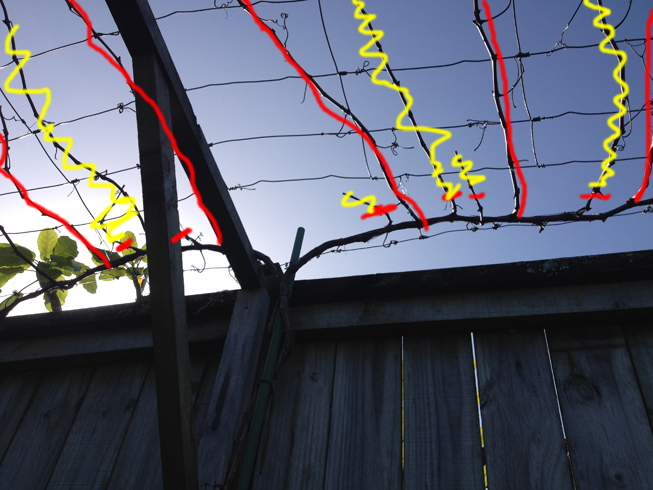
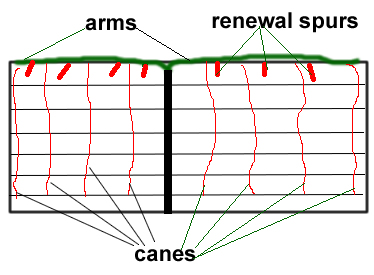
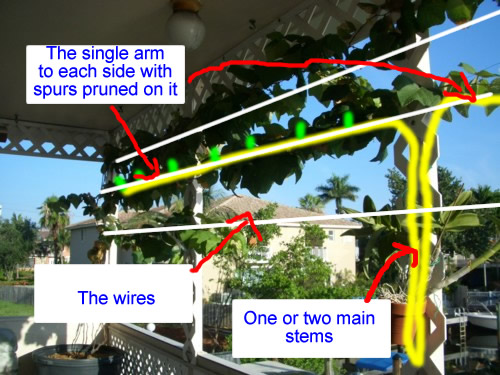
We develop what we call cordons or arms, with spurs (short bearers) situated on the arms to be the fruiting zone of our vines.  You cannot simply cut canes left and right, and expect your vine to produce grapes – it simply doesn’t work that way.  In most cases, if you get your pruning done properly, your grape vines will produce grapes.

  • Training

As said earlier, the key to having a productive grape vine starts with training a grape vine from year one.  Many new grape growers just plant the grape vine and then expect it to climb to the trellis or arbour by itself.  Although sometimes this happens, it is not the ideal way to train a grape vine.


You need to make sure that you train only one training shoot the trellis or arbour – if you prefer to have two main stems one day, then train only two shoots to the trellis.  Your vines will reach the trellis or arbour in half the time – I promise.  The methods I use and explain in the Complete Grape Growers Guide, get my grape vines to the top of ANY trellis within one year.  The second year I develop the framework and then BOOM!!! Tons of grapes!  The key is – “Train your grape vine with one goal in mind – to reach the trellis wire in year one!”

  • Soil pH

The third most asked question is about the pH of the soil.  Strange enough, but so it seems, new grape growers are more concerned about soil pH than about planting the correct variety and training the vines.  Don’t get me wrong, soil pH is very important, but just as important is planting a variety that suits your climate, suits your needs and suits your soil type.


To answer the pH question; grape vines can grow in a relative wide range of pH soil. The best pH for growing grapes is slightly acidulous; between 6.0 and 7.2, although you can go as low as 5,5 and as high as 7.8.   Soil with a pH outside these ranges are not suitable for growing grapes – or should be corrected first. 


Hope this gives the new grape growers some guidance to where they should focus their attention on. 


Take care,

Danie

www.my-grape-vine.com

Japanese beetle update – amazing!

This is an amazing video that makes allot of sense.  Maybe if some you can try this out to see if you can stop Japanese beetles from attacking your grape vines.

Would love to hear your comments!

Take care

Danie

Japanese Beetles On Grapes

Adult Japanese Beetle

The Japanese beetle (Popillia japonica, also known as the jitterbug) is one of the most visible and most destructive feeders of grape vine foliage out there. 

The Japanese beetle attacks most green parts of the grape vine, but mostly feeds on young leaves in the upper part of the canopy.  Occasionally, they will feed on fruit also, making it unusable for export or table grapes. 

When Japanese beetles feed on the leaves of the grape vine, they will eat the foliage surface material between the veins, leaving only the veins in place, which will look like they were skeletonized.  Although mature, vigorous growing grape vines can tolerate quite a bit of defoliation, this insect can cause some serious damage to a grape crop. 

The life cycle of the Japanese beetle:

Japanese beetles overwinter as larvae in the soil.  They will feed on the roots of grass and other plant material.  Adult beetles will become visible in late spring and may be present in vineyards until mid in summer.  The adult Japanese beetle (as seen in the picture), has a distinctive, shiny green body and head, with copper-coloured wings.  The sides and back of the body is covered with small white hair.  The female Japanese beetle is bigger than the male and is approximately ½ inch long.

After mating, the female Japanese beetle will temporarily leave the grape vine, to lay up to sixty eggs in the soil of your vineyard or if you have a backyard vineyard, in your lawn.   In midsummer, the eggs will hatch and will reveal small, white grubs or larva, where they will feed and hide up to 8 inches deep into the soil, to wait out the cold of winter.

Japanese beetle control:

Strange enough, in Japan, where the Japanese beetle originally comes from, this insect is not a big problem!  Why?  The answer is; natural enemies that feed on the grubs. 

For the organic grape grower, you can control Japanese beetle by putting out traps with a pheromone that attracts the female and a floral lure, that will attract the male.  The disadvantage of using these traps are that you can lure more Japanese beetles to your vineyard, as they can fly quite long distances in a short amount of time.

A program with physical and biological control of the grabs is a more effective method of controlling Japanese beetle.  The two nematodes that are most effective against Japanese beetle grubs are Steinernema glaseri and Heterorhabditis bacteriophora.  Both these nematodes are commercially available.

Milky Spore (Bacillus popilliae), a naturally occurring host specific bacterium, will also attack the destructive white grubs.

Important:  If you are to use chemicals to treat Japanese beetle, then spot treatments with botanical insecticides is advisable.  Unfortunately, these chemicals also kill the biological nematodes that help control Japanese beetle.  In other words; keep chemical treatments to the minimum.  Products like Carbaryl, Malathion, Methoxychlor, Rotenone can be used on adults and Merit (turf), Marathon, Bendiocarb can be used to control grubs.  Make sure these products are registered in your country or state before you use them and PLEASE, read the labels of the products BEFORE you use them.