subscribe
Who else wants to learn how to grow grapes? This grape growing blog is your free resource to growing grapes.

Archive for May 2007

Summary of how to grow grapes in your backyard

History of grape growing

Drinking wine is a pleasure that has been enjoyed since almost 4000BC. The science of viticulture, or grape cultivation, began with the need to domesticate wild vines. Viticulturists needed to breed domestic plants with higher fruit yields, since wild grapes invest little energy in fruit production. Wild grapes were also dioecious, meaning that there are male and female versions of the plant. Early viticulturists selected a rare mutant vine with perfect flowers (that is, functional male and female components) to ensure all their vines bore fruit. Today many varieties of common species of grapes are cultivated and used for wine production.

Soil preparation

It is important to carefully select the planting site. Grapes can grow in a wide variety of soil types and pH ranges, certain conditions induce better growth and yields. First, grapes prefer well-drained and slightly acidic soil. The best pH is typically between 6.0 to 6.5, but grapes will grow in soils with pHs ranging from 5.5 to 7.5. If your soil is a little basic, you can add in sulfur or ammonium sulphate to decrease the soil pH. Ideally, grapes should be planted on a south-facing hillside, although in a home garden you may not have this luxury. You should choose a site in your garden that receives full sunlight – grapes do not like the shade. You’ll need to ensure that the soil at your selected site is worked over well before planting to remove any perennial weeds. Addition of peat moss or manure to the site will also help to improve soil quality.

Planting methods

The way you plant your grape vines is really important for their health and productivity. Vines need to be planted approximately eight feet apart in rows that are between eight and ten feet apart. If you are planting on a sloped site, ensure that the rows run perpendicular to the slope. If your site is exposed to a strong prevailing wind, orientate your rows in the direction of the wind to minimize damage.It’s preferable to choose one- or two-year-old, dormant, bare-root vines from a reputable provider. Soak the roots of the vines for several hours prior to planting. When planting, ensure that the hole is slightly larger than the root system of the plant and that the vines are set at a depth equivalent to the one they grew in at the nursery. If your vines are grafted, ensure that the grafting union is approximately two inches above the soil. Once you have planted the vines, you’ll need to remove all but the most vigorously growing cane and cut this back to just one or two buds.

Training your grape vines

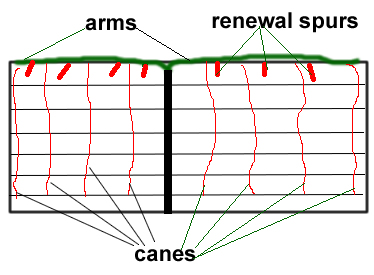
To facilitate cultivation, harvesting, pest control and to maximize yield, grapes are trained to a specific system. There are many different training systems, however the single curtain and four- or six-cane Kniffin systems are most suitable for home gardeners. The four-cane Kniffin system trains four fruiting canes to two trellis wires whilst the six-cane Kniffin system trains six canes to three wires. The six-cane system is best for less vigorous grape varieties. Using the single curtain system, the main trunk of the vine is attached to a horizontal wire approximately six feet above the ground. Two cordons (extensions of the main trunk) grow along the wire to the left and the right of the trunk, with five or six fruiting canes on each cordon.

Pruning your grape vines

Annual pruning of your vines will be necessary to ensure optimum yield and sufficient vine growth to produce next year’s crop. The best time for pruning is late Winter or early Spring, during the vine’s dormant phase. You’ll need to keep a few things in mind when pruning; fruit is borne on one-year old canes, the most productive of which are between 0.25 and 0.30 inches in diameter. The most productive buds occur in the middle of the cane, so it is best to prune canes to between eight and 16 buds. New farmers may find the advice of an experienced viticulturist helpful.

Harvesting your grapes

Harvesting should occur when the grapes are fully ripe. Color isn’t always a reliable indicator of maturity, so taste-testing is essential! Cut the grape clusters from the vine with a sharp knife and handle the grapes by their stems. Grapes do not handle or store well, so enjoy the fruits of your labor as soon as possible!

This is only a summary of how to grow grapes. For a more complete and much more helpfull explenation of how to really sky rocket your grape crops, you need the get YOUR copy of the Complete Grape Growers Guide – Click Here

Have a grape day

Danie

The Grape Guy

http://www.my-grape-vine.com

Grapes: Nutritional Value

Grapes are one of the most popular fruits in the United States, ranking sixth behind bananas, apples, watermelons, oranges and cantaloupe. Regardless of whether or not you choose red or white (also known as green) grapes, there is good evidence that grapes are good for you. Just one cup of grapes which, depending on the size of the grapes, equates to about eighteen grapes or 100g, will give you one of the five servings of fruit and vegetables that the Centers for Disease Control and Prevention recommend that you eat daily. Like most fruits, grapes are a rich source of vitamins and minerals that can contribute to a balanced, healthy diet.

In particular, a single serving of grapes offers you 176 milligrams of potassium and 13 milligrams of calcium. Potassium and calcium are both important in transmitting nerve impulses and are therefore necessary to maintain efficient nervous system function. A serving of grapes will also provide you with 9 milligrams of phosphorus, which is an integral part of nucleic acids – the building blocks of genetic material. Magnesium is also present in grapes, with a cup of grapes containing 4.6mg. This mineral is important for muscle contractions. There are trace amounts of iron and selenium in a serve of grapes – approximately 0.4 milligrams and 0.3 milligrams, respectively. Small amounts of zinc, manganese and copper can also be found in grapes.

You may have been advised to avoid fruits if you are on a diet, as they contain a lot of carbohydrates. This isn’t strictly true. A serving of grapes will set you and your diet back by about 69 calories – compare this to an equivalent weight of apple, which contains approximately 58 calories. Each 100g serving of grapes has 15.48 grams of sugar and a total of 18.1 grams of carbohydrate. Grapes are not particularly fatty – there’s 0.054 grams of saturated fat, 0.007 grams of mono-unsaturated fatty acids and 0.048 grams of polyunsaturated fatty acids. The great news for those watching their cholesterol intake is that grapes are totally free of cholesterol. Grapes also offer approximately a gram of protein and 1.6 grams of dietary fiber, which is important for maintaining good digestive health.

One of the greatest advantages of fruits and vegetables is the high quantity of vitamins and minerals they contain. Grapes offer 10.8 milligrams of vitamin C and 92 international units of vitamin A. There’s about 0.19 milligrams of vitamin E in a regular serving of grapes, and 14.6 micrograms of vitamin K, which is essential for normative blood clotting. Grapes contain a good concentration of B vitamins; there’s 0.086 mg of vitamin B6, 0.07 milligrams of riboflavin (B2), 0.188 milligrams of niacin (B3) and 0.05 milligrams of pantothenic acid (B5). These B vitamins are critical to maintaining optimum cellular function, particularly in the metabolism of energy. You can obtain 3.6 micrograms of folate by eating a serve of grapes – this is important if you are pregnant or planning to become pregnant.

Grapes are also rich in antioxidants such as anthocyanins, flavones, geraniol, linalol, nerol and tannins. It is these antioxidants that scientists believe are responsible for protecting the body against many forms of cancer. Red grapes, in particular, contain a compound called resveratol, which has been demonstrated to reduce cholesterol and protect the heart. Fresh grape skin contains between 50 to 100 micrograms of resveratol per gram, depending on the variety of grape.

Both red and white wine contains resveratol, with red wine having a higher concentration because both the skins and grape flesh is fermented to produce the wine. Resveratol, obtained from the grapes used to make wine, is thought to be responsible for the keeping the incidence of heart disease in France low, despite the relatively high concentrations of animal fats found in the typical French diet. The antioxidant helps to lower the levels of cholesterol circulating in the body and hence reduces cholesterol deposition in the arteries. There is good evidence that regular consumption of red wine – approximately three or four glasses interspersed over a one-week period can have positive cardiac benefits.

Grapes can be dried to produce raisins, sultanas or currants. The dried versions of grapes also confer nutritional benefits. In particular, raisins have been shown to contain high quantities of boron, which is a mineral that has an important role in maintaining good bone health. Raisins also promote healthy gums and teeth, and can help to prevent against macular degeneration.

After researching the nutritional value of grapes, one wonders if the story of Johanna Brandt, and how she cured her stomach cancer isn’t true after all. If you want to know how she did that,

Grape Cure

Grape Cure

Click Here.

There are many reasons to enjoy grapes as a healthy and nutritious snack!

Have a healthy grape day my friend!

Bud break on grapes

I want to share with you a secret many grape growers overlook – and it is the effect bud break has on your grape vine.

What is bud break?

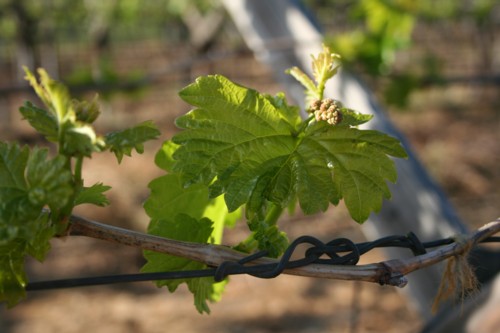
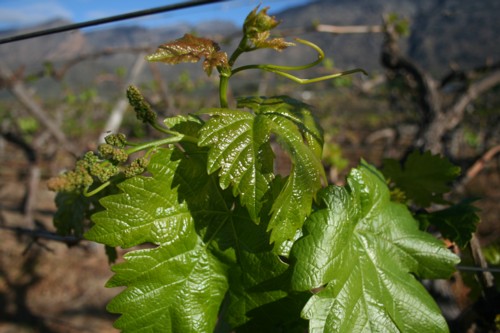
Bud break is when the buds on spurs and canes you pruned during winter (or early spring), breaks open and reveals the new growing point of the shoot that will develop from the bud. Depending on the variety, bud break starts about 2 – 3 weeks before the first growing point of shoots are visible.

Why is a strong, even bud break important?

During winter or early spring we prune our grape vines to form the structure of the vine. Another, even more important, reason we prune is to reduce the amount of buds on each grape vine for a smaller, higher quality grape crop. There are many theories on how many buds to keep per vine, but as a rule of thumb you can use the following method.

To determine the number of buds to leave, use the “30 plus 10” formula.

For the first pound of canes removed, leave 30 buds. For each additional pound, leave an additional 10 buds. For most the training systems, the maximum number of retained buds on a grapevine should be less than 60. As you can imagine, having buds that don’t sprout will reduce your crop size even more and can result in a too small crop, making it an uneconomical grape harvest.

The evenness of your harvest will be determined by the evenness of bud break. If you are a commercial grape grower, you want all your grapes in one vineyard, to be ready for harvest at the same time. This will reduce the amount of time spend in collecting the crop because you don’t have to visit the vineyard three or four times to pick all the fruit.

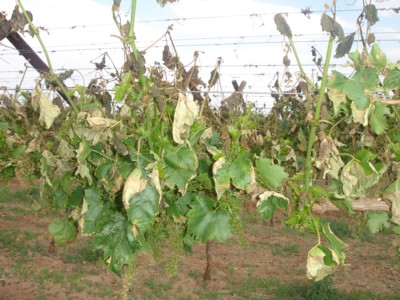
A strong bud break will not only increase ensure a decent crop size, but also make pruning next year much easier. Some grape varieties that is cane pruned, like Thompson, Crimson for example, tends to sprout more evenly and stronger at the last buds on the cane. The biggest problem grape growers have, when this happens, is that they will not find enough pruning wood next year, to retain the structure and amount of buds for a decent crop size.

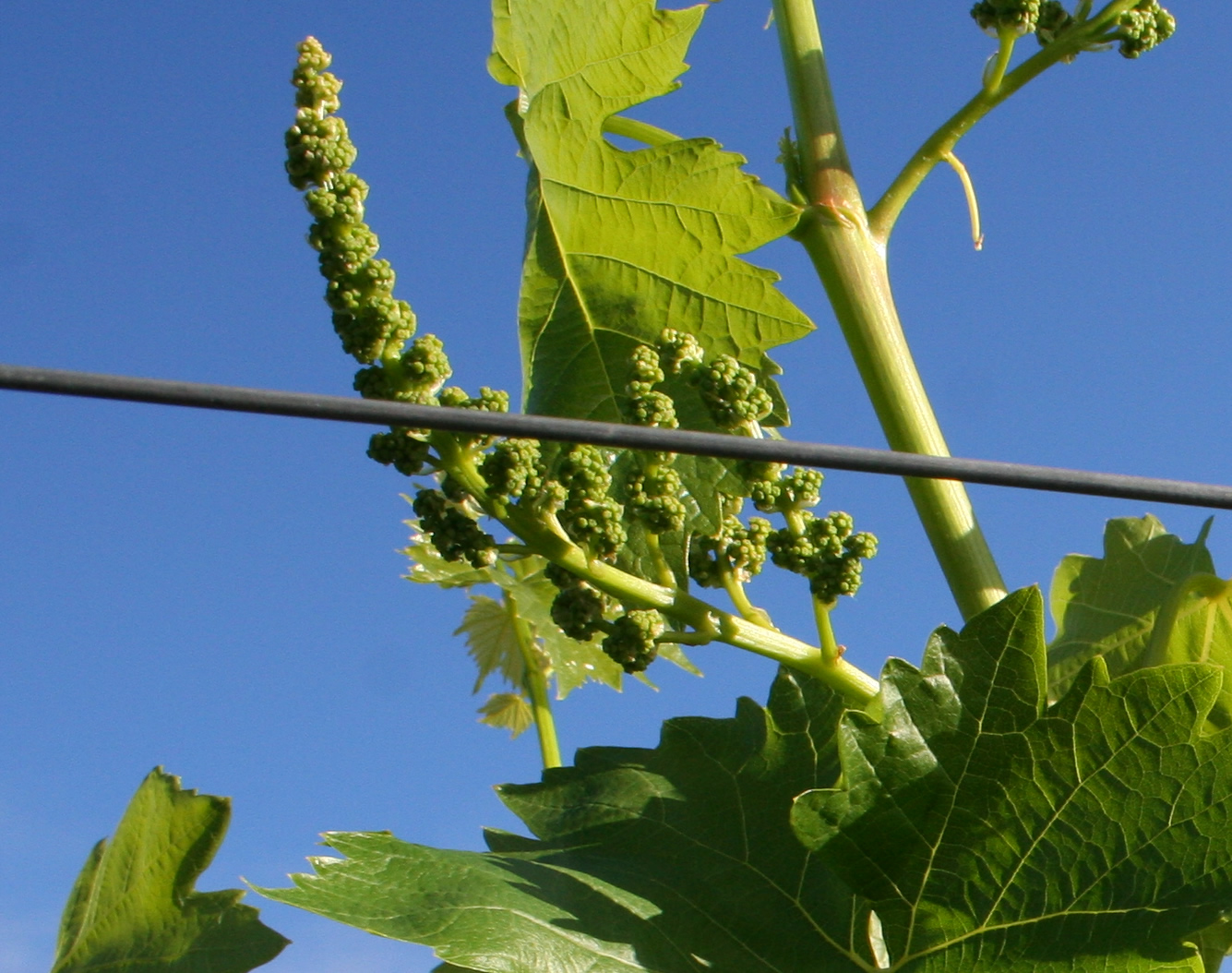
Look at the picture from one of the My-Grape-Vine customers. This is a classical example of a grape vine sprouting strongly on the tips of the canes and the basal and first buds have a poor sprout percentage.


How to improve an even, strong bud break.

First of all, I want to share with you a theory I have. If you don’t have to cane prune – don’t cane prune. The only reason why you should can prune is when you grow a veriaty that is unfruitful – period! When you spur prune, you will have a much higher bud break %.

So, choosing your pruning method carefully – this will ensure a decent, sustainable crop, year after year AND prune the correct way.

There are lots of so called pruning secrets available on the Internet, but my pruning system I teach in the Complete Grape Growers Guide, has proven itself over the past decade to be the best and most effective way to prune.

The second theory I have is: Proper sunlight penetration.

A grape vine that is too compact (condensed) will overshadow the shoots and and buds during the growing season and as we all know by now, a grape vine needs sunlight to “ripen” the buds on the shoots. In other words; having a well ventilated, not too compact grape vine will improve the bud break percentage.

Now you may ask yourself the following question. “I have a variety that needs to be cane pruned, and is not too compact, BUT I still get a poor bud break percentage – what do I do?”

I have another trick up my sleeve – luckily!

And it is called: “Hydrogen cyanamide (Dormex)” – please note, it is not cyanide, but cyanamide

Applying Dormex to the grape vine’s buds, one month before bud break will significantly improve the bud break percentage and will also make bud break more even.

The concentrate of which it is applied is 3-5 liters (101 – 169 fluid ounces) per 100 liter (26.4 gallons) water for table grapes and 2 – 3 liter (67 – 101 fluid ounces) /100l water for wine grapes. Be sure to read the product label before applying Dormex.

WARNING!

Dormex irritates the skin, so wear proper gloves when you apply it.

If you live in an area where late frost is a problem, I would advise you to be careful. Why? Dormex will not only improve bud break, but it will advance bud break as well. Some grape growers claims to have advanced their sprouting date by up to 3 weeks. My personal experience tells me that id advance bud break by +- one week. So be careful not to advance the sprouting date of your grape vine by so much, that the danger of cold damage will become a bigger concern.

I hope you have enjoyed this blog, and I hope you understand now why an even and strong bud break is so important. You grape growing success depends on this!

For more proven theories, tricks and grape growing tips, you can get yourself the Complete Grape Growers Guide and grow your grape vine like a PRO!

Regards

Danie

The Grape Guy