subscribe
Who else wants to learn how to grow grapes? This grape growing blog is your free resource to growing grapes.

Archive for March 2007

Pruning Thompson Grapes

Pruning your Thompson Seedless grape vine is easy, IF you know what you are doing!

Thompson Seedless is, what we grape growers call it, unfruitful. This means that a Thompson don’t produce grapes from bud 1 to 6 on a shoot. Now, you might think: “My Thompson bears grapes on those buds!”. Yes, that is true, as this is NO rule of thumb, but it is a known fact that the fruit-bearing buds on a Thompson are between bud 8 to 14 (counting from the basilar bud on the shoot).

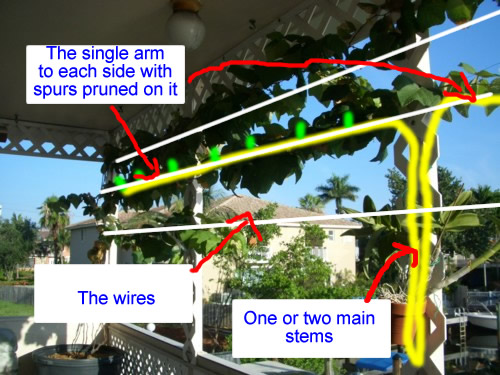
Normally, you prune the most of the wine grape and table grape varieties, with spurs (3 buds), but in the case of Thompson’s, you will have to cane prune (pruning with long bearers).

It is very important to prune a spur for every cane you prune. This spur is called a renewal spur, and the only reason we prune a renewal spur, is to renew the grape vine next year.

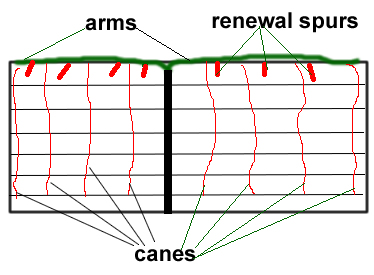
Now this might be a bit vague, trying to explain in words, so I have added some pictures found in the Complete Grape Growers Guide.

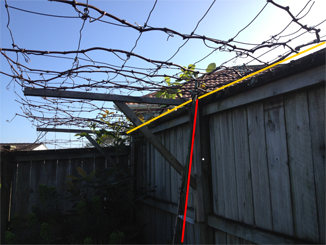
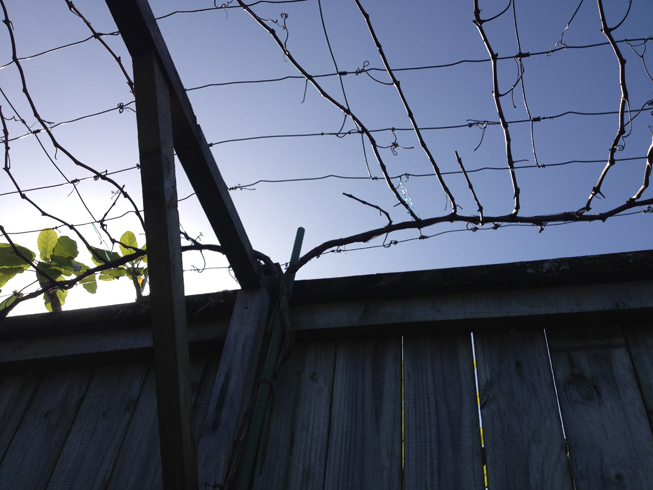
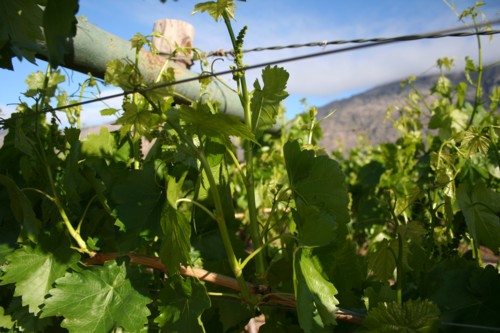
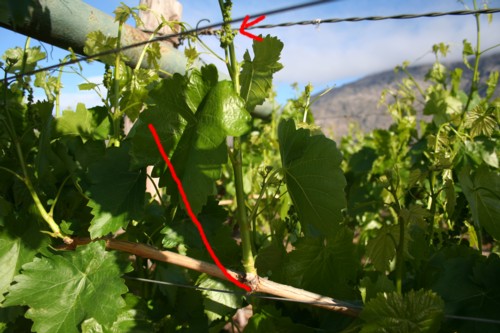
If your grape vine was pruned last year, your canes will look something link this. Notice the renewal spur on the frame of the vine. This will stay a spur until you need to use it for renewing the vine. This normally happens when the first few buds on cane of an unfruitful variety (like Thompson’s and Crimson Seedless) does not shoot (sprout).

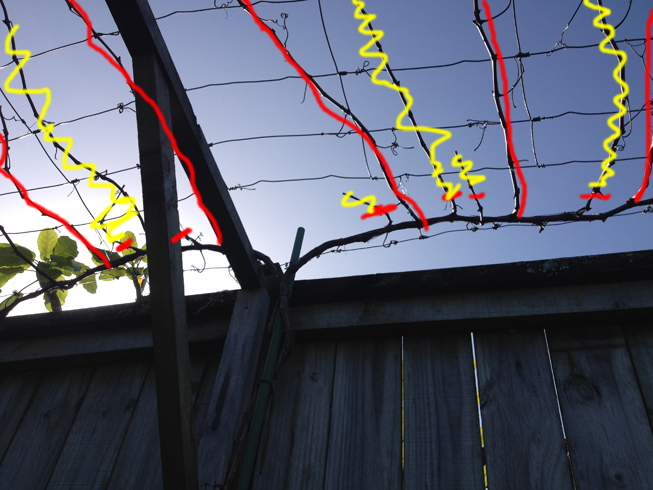
The following sequence of images will show you how to cane prune your Thompson vine

(Sorry for the quality, but blogger blurs the images when I try to enlarge them, the quality in the

Complete Grape Growers Guide is much better)

Notice how I have removed part of the “framework” of the vine. Next year, the spur will have two sprouts again (remember, you pruned the spur with 2 buds) and the cane will have lots of side shoots again (looking like the first picture).

The whole process starts again!

With a Thompson grape vine, you must choose the canes you will use for your bearers carefully. Those thick, flat-looking canes, with long inter-nodes are normally more unfruitful than canes the diameter of your ring finger (or a bit thicker than a pencil). Choosing the wrong canes, will result in an lower yield, and you will not have enough “wood” next year to choose from when you prune.

I think you realise by now, that if you have pruned your grape vine the correct way last year, the pruning effort this year, will be much easier, ESPECIALLY when cane pruning (like Thompson Seedless).

Some hints when you prune

  • Take time to look over the vine before you start
  • Pick out several well-placed canes that look like good prospects.
  • Cut out old wood and canes that are obviously unsuitable – canes that are small and weak, or too far out from the main trunk. This will clear up some of the confusion as you go.
  • Always leave at least one alternative cane until the last, in case you break one.
  • Bend canes gradually into place before tying. Canes that grow in a direction other than where you want them can often be persuaded to cooperate by cracking them gently. Use both hands to bend the cane at the point where you want it to change direction, and apply pressure just until you hear the fibers crack.

Now this is only an overview of how to prune Thompson Seedless and other unfruitful variates. The Complete Grape Growers Guide goes much deeper into the science of pruning your grape vine.

Have a grape (great) day my friend
Danie
“The Grape Guy”
www.my-grape-vine.com

What to Expect When Attempting your own Hydroponic Garden

In order to know what to expect when attempting your own hydroponic garden is to know what a hydroponic garden is. Once you understand what this type of gardening entails, you will be more aware of what to expect when constructing a garden of this nature.

Hydroponics is the practice of growing plants in water without soil, and with the proper nutrients added. This process became considerable popular in recent years, and has been done experimentally for over a century. In the year 1929, new studies regarding the feasibility of hydroponics for growing commercial crops have taken place as well.

Nowadays, many home gardeners and farmers use this technique. This method enables plants to be grown closer together in a field, which helps increase the yield of crops. Not only that, but also several crops can be grown in the same hydroponic growth tank.

As far as what to expect from the process of using the hydroponic technique, you will experience both the advantages and disadvantages of growing crops in this manner. One major advantage of hydroponics (besides conserving space) is that it virtually eliminates all weed and pest problems. It is another form of pesticide-free gardening, in some cases.

The major disadvantage of hydronponics is that the equipment used to garden using this methods is very expensive. You will also need to be prepared to provide extensive physical support for your plants when grown by this method. However, this growing method for the most part can benefit many gardeners and crop producers in many ways, if they know how to do it correctly. Those who are successful at this type of gardening can expect nothing but a rich harvest.

Another big advantage for small-scale hydronponic gardeners is the opportunity to grow plants year-round. This can be accomplished by the use of indoor lighting. The correct type of lighting that you would need for growing plants indoors using the hydronponic method would be a High Intensity Discharge (H.I.D.) light. These types of lights are designed to give off the correct spectrum of light waves, which are perfect for growing plants indoors-and in water no less.

The basic hydronponic growing system includes a variety of other components as well. For example, hydroponic-grown plants are held upright by wire supports or are rooted in substances such as sand or gravel. Furthermore, the growing environment for hydronponic-grown plants needs to be as sterile as possible for best results.

To get you started on using the hydroponic system you will need to keep in mind a few tips. For example, if you want to plant a spring garden, there are some things you will need to know, such as the effect of germinating your seeds ahead of time.

In order to germinate your growing seeds you can grow them a month early with an indoor grow light, and wait until after the last projected frost date to transplant it. Even if you decide to transplant your indoor plants outdoors, you will enjoy a longer production and/or blooming season.

The nutrient solutions added to plants grown by the hydronponic method require the correct concentration of various nutrients such as nitrogen, phosphorous, potassium, and other nutrients that most plants need. One recommendation for growing plants indoors is to add liquid seaweed to them, which also supplies necessary ingredients to plants.

Other names for hydronponics are soilless culture, chemiculture, and water gardening. This type of growing has impressed many people during the experimental phase and is becoming more and more of a successful form of gardening. It is one way of producing organic foods on a larger scale as well.

Now that you know a little more about hydroponics and what to expect from attempting to construct a hydroponic garden it may be time for you to try it for yourself. You have plenty of free resources available to you online to help you get started. In addition, you can refer back to this article.

If you ever have any questions about the hydroponic growing process you can contact gardening or farming expert. They will help direct you to all the information and resources that you need to help you along.

To find out more about hydroponics click on the book

Laying out your vineyard

Hello grape fans!

Here is how to lay out your vineyard for optimum production, pest control, grape coloring and for best airflow through the vines.
Spacing:
I get lots of question about the spacing of the vines (in the row and between the rows). Now, there isn’t really something like wrong spacing between vines, but there are a few factors to take into consideration when planing your grape vine.
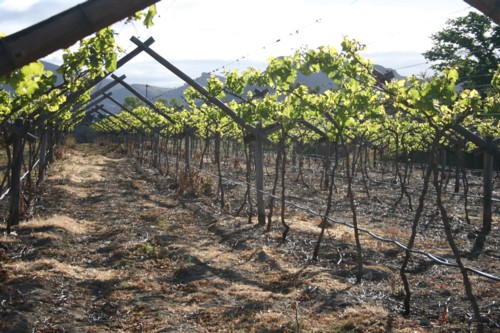
For bunch grapes, the most commonly used spacing is 7.5 to 8 feet between vines and 8 to 12 feet between rows. If you use implements like tractor and mowers in your vineyards, you need to plant the rows wide enough for the implements to be able to move between the rows.

On my farm, I use Slanted Trellis systems, and therefore I row widths of 3 meters (10 feet) rows – remember this is for bunch grapes. Here is a picture from the Complete Grape Growers Guide.

Another big factor that will determine the row spacing is the way you train your grape vine. Using a Four Cane Kniffen training system, takes up less space between the rows than say a Geneva Double Curtain training system, therefore the rows don’t need to be as wide.
Geneva double curtain

Four Cane Kniffen

When you look at how vigorous your variaty grows, this will also influence your decision on row width. Vigorous varieties should be planted further appart between vines and the rows should be a bit wider as well.

The way you prune your grape vine will also determine the spacing between vines. When you prune with canes, you must plant your vines far enough apart (at least 8 feet) so that you can twine the canes on the trellis wires without overlapping the adjacent vine’s canes.

Row direction:

The effect row direction has on the productivity is one of the most common mistakes “newbie” commercial and home grape growers make.

When planning your grape vine, you must always strive to expose as many leaves to direct sunlight as possible. This will ensure optimum photosynthesis, optimum pest control and good coloring of grapes. The prevailing wind direction is also important, especially in wet, humid climates. Planting the grape vine parallel with the prevailing winds, will slow down the wind speed and the evaporation of water from the leaves will be much slower, increasing the chances of diseases.

When you plan to establish your vineyard on a hill, with a slope, you normally plant on the contour of the hill. This is the best way to prevent erosion during heavy rains, BUT planting a vineyard on the contour of a hill, will slow down the movement of cold air through the vineyard, and the danger of cold air getting trapped (like a dam) in the vineyard could lead to cold damage of the vines. Be sure to channel the air out of the vineyard by constructing roads and dead ground at the lowest parts of your vineyard. A bush of forest close to your vineyard, could have the same affect, make sure to funnel the cold air out of the vineyard.

I hope this clears out some questions about row and vine spacing, and some questions about where to grow your grape vine.

For more information on growing grapes, get your copy of the Complete Grape Growers Guide today!

Have a grape (great) day!

Danie

www.my-grape-vine.com

Progress with website

Hello dear grape lovers.

Just a short update on the My-Grape-Vine website.

We are nearing a 1000 subscribers now! Amazing isn’t it!

As promised, I am working on making My-Grape-Vine, the ultimate grape growing website. I’ve added a support page, where you can quickly send any grape growing question to My-Grape-Vine.

The next thing I want to add is the Complete Grape Growing Forum – a forum where you can ask other subscribers (and myself off course) grape growing questions, post your stories and also post some pictures of your grape vine. I think this will be a hit among My-Grape-Viner’s, but still needs some fine tuning – will keep you posted.

By the end of this week, I will start a list cleanup process – we are currently experiencing quite a few bouncing emails due to invalid email addresses. There are several reasons for this, but the main reason is people giving fake email addresses of undeliverable email addresses and off course if someones email address have changed.

The whole idea is to clean up the list so only grape growers who really want to receive the second series of grape growing newsletters will be on the list.

As soon as the forum is online, I will send you guys and girls an email, although it will be after the list cleaning process.

Have a grape (great) weekend

Danie
“The Grape Guy”
www.my-grape-vine.com