subscribe
Who else wants to learn how to grow grapes? This grape growing blog is your free resource to growing grapes.

Archive for January 2007

The role irrigation has on fungus diseases and nematodes in vineyards

Hi everyone,

Wow, I see it has been more than a week since my previous post!

Here is something to “tickle” your thoughts.

Many home grape growers use the same irrigation system on their grape vines as on their lawns. Decide for yourself if it is wise or not …

Any form of irrigation normally helps the start and spread of nematodes and fungus diseases, but not all irrigation methods has the same effect. Normal sprinkle and drip irrigation will not have a huge effect on the spread of the diseases, if not applied directly on the leaves of the vine.

There are a few factors that influence the effect irrigation has on the spread of diseases. The interaction of the climate created by the water, the pathogen involved, and the grape variety will influence the spread of the disease.

During irrigation, the microclimate surrounding the grape vine, changes. The water reduces the air temperature, especially when sprinkle irrigation is used. The humidity around the vine, increase due to evaporation of water and it is a known fact the increase in humidity will increase the chances of spreading a fungus disease. Watering a grape vine, will increase the vigor of the vine, as we all know and a more vigorous vine will overshadow bunches. It is found that shaded bunches will be more susceptible to grey rot than bunches in direct sunlight, because the circumstances for spore development and spreading is much better.

The presence of downy mildew during the late summer in countries like Australia and South Africa, is mainly because of the effect irrigation has on the micro-climate surrounding the vine, therefore, you need to sustain your fungus spray program as late as possible.

There are three cycles in the life cycle of a fungus; sporation, spreading of spores and finally the germination and establishment of the spores. A fungus disease like downy mildew needs “free water” for the sporation and establishment of the spores to take place and the water drops of sprinkle irrigation or rain, can spread the spores. The germination then takes place when the climate conditions are ideal and spores will form shortly there after. The whole cycle starts over again and this within 48 hours! Nevertheless, with enough spores present, free water and an ideal climate, this disease will spread like a field fire.

When we look at nematodes, very little grape growers actually know the levels of dangerous nematodes (there are good ones present as well) in their soil. Nematodes damage the roots of the grape vine by attaching itself to the roots and sucking juice from it. This will prevent the roots of the vine to function normal. Nematodes can also cause secondary virus infections like fan leave.

In previous years, farmer from California increased the amount of water they give, to compensate for the loss of water and nutrition uptakes, due to fact nematode damage of the roots of the vine. This had a snowball effect, as more water will spread nematodes much quicker. Nowadays, a more regulated watering schedule and the chemical and biological removal of nematodes decreased this problem dramatically. When planting new vines, make sure your soil is free of nematodes, otherwise your vine will never be a healthy vine.

To conclude this article, I want to urge you to never use overhead irrigation (if possible) on grape vines. The disadvantages of using this irrigation system are so many; it will never justify its use. Rather use a drip or micro irrigation system that will not spray the shoots and leaves of the vine.

When fungus diseases are a big problem in your area, try to water your vines very early in the morning or during the evening. This gives the vines time to dry off, before the temperatures will rise to levels where fungus diseases will spread.

Growing grapes in cold climate conditions

As a South African and a professional grape grower, learning about the grape vine each day, is my passion. Therefore I’ve done some research on growing grapes in cold climates, something we, here in South Africa, has little problem with. The only time our vines get cold damage is when there is heavy frost early in spring, after the vines sprouted.

Growing grapes in mild and very cold climates do not differ as much as growing grapes in the tropics, and the pruning methods, training methods we use here in South Africa, are used in very cold climate conditions as well.

However, there are a few things a grape grower must consider or think of, before planting grapes in these very cold conditions.

I will be touching on some cold resistant wine varieties and also what the grapes growers do to protect the grape vines.

What Great Wines are Produced in Cold Climates?

The Grape varieties I am going to talk about are hardy to at least -20F/-28C. The various types include Red, White and Table or Juice Grapes. I will list some of the most popular kinds in each group. The first group is the Red Wines that include such varieties as the Baltica, Landot Noir, Savrevois, St. Croix and Swenson Red. Next we will cover the White Wines. Some of the grapes that are in this group include Alpenglow, Brianna, Edelweiss, Frontenac Gris, LaCrosse, LaCrescent, Prairie Star, Swenson White and Vignoles. As for the final category, which is the Table or Juice variety, they include the Bluebell, King of the North, Reliance, Somerset Seedless, Toldi, Trollhaugen and the Valiant grapes.

What is the main concern with cold weather varieties?

Damage to the crop. We will be taking a quick look at how to notice the most prominent damage to the crop when a frost or freeze has penetrated it. In one case, in Southwest Michigan in 2002, over 95% of the crop that was to produce had most primary growth destroyed by the frost.

But before we move on, lets look at the grape bud. A grape bud, is actually three buds. A primary, secondary and tertiary bud. When the primary shoot, or the bud itself is killed by frost or freeze, the secondary bud will sprout. Secondary and tertiary buds, produce less grapes, and grapes of lower quility, but at least the grapes in 2002 (mentioned aboce) produced some grapes, so the grape growers didn’t have a total crop loss.

Cold damage on buds appears dry and shrunken. After awhile, they will crunch when you pinch them with your fingers. Injury to the plant may also include the vascular tissues of canes, cordons and trunks. In some cases, it may even kill the whole vine. That is what happens when a plant has frost hit it. What happens when a freeze hits the plant or grapes? When a plant is hit by a freeze, you will be able to pick it out clearly. The grapes physical body will look water logged and black. It doesn’t have to be dark black to show signs of the damage.

How does a farmer protect from these conditions?

Location, location, location. That’s what they say about business, movies and networking with people. Well, the same seems to be true for the grape crop and protecting it from the elements.
The types of soil used, the slope of the land and even the drainage all have to be taken into consideration when you decide on how to protect your vineyard in down seasons.
The secondary process is finding a suitable covering to protect your plants. In tests, they have found that good old fashion snow cover and geotextile fabrics worked just fine.

They found that if you use soil to cover the grape vine, will protect the vine from cold damage, but it’s not always possible to remove the whole vine from the trellsi it actually helps to breed more disease and inhibits the following seasons production levels.

It seems that geotextile fabrics work best for tender and semi-hardy varieties. They found that snow cover is best where there is a vine without protection and when pinning half of the canes to the ground. This method is most effective in areas that have good drainage and have a southernly slope to the land.

You should probably use geotextile fabrics for any other produce. Just remove them from the trellis if possible, lay them flat on the ground and use the fabric to cover them for the off season.
Covering the grape vine, will not 100% prevent cold damage, but at least there is a chance you vine will survive and you will have grapes to harvest the year to come.

Danie
“The Grape Guy”

Autor of the Complete Grape Growers Guide – a step by step guide, how to grow grapes.
www.my-grape-vine.com

Grape Pictures

Hello my dear grape growing friends.

As promised, here are some pictures of my harvest.

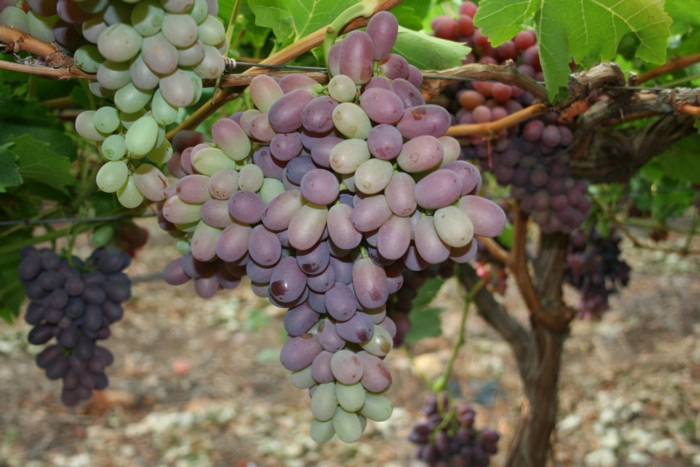
My Sultana crop – one of the best I’ve had in years
Look at the berry size – amazing isn’t it?

You must know this vineyard! Yes, it’s the one on my website, where you have
registered for My-Grape-Vine

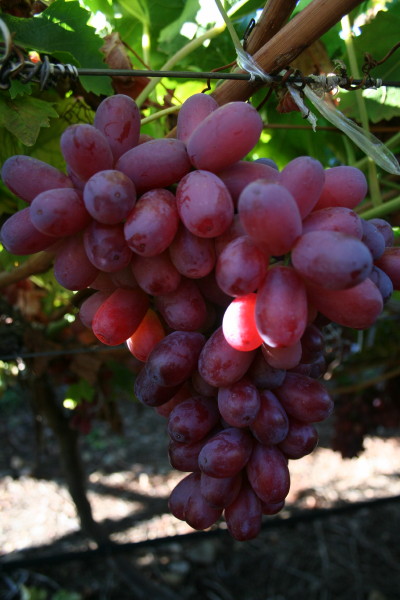
(Red Globe)

Regal Seedless

We have to cut these bunches in half to be able to pack them propperly!
Looks lovely , he?

Those of you who still had doubts about my ability to grow grapes – well, what do you say now?

LOL……… I would love to hear what your comments or questions are about the grapes.
Have a grape (great) day
Danie
Author of “The Complete Grape Growers Guide” teaching you how to train, prune and grow your grape vine like a pro!

Get your copy of this excellent book for only $27-95 – click here

Concord Grapes – Grape of the millions

While grapes have been used in production for thousands of years, it was not until the middle 1800’s that the Concord grape was first introduced. This special grape that is known for its’ deep purple color and robust aromas was named after the Village of Concord in the state of Massachusetts. Ephraim Wales Bull was the one who experimented with the seeds from wild grapes in the area and eventually came up with what is known as the Concord grape. Bull created this special grape to ripen as early as possible so there would be no danger of losing them to the harsh winter frosts of Massachusetts. After Bull entered his grapes in a horticultural exhibition and won, his grapes went on to become known worldwide.

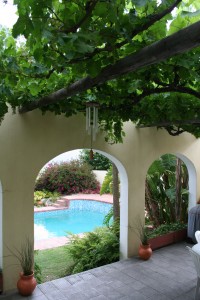
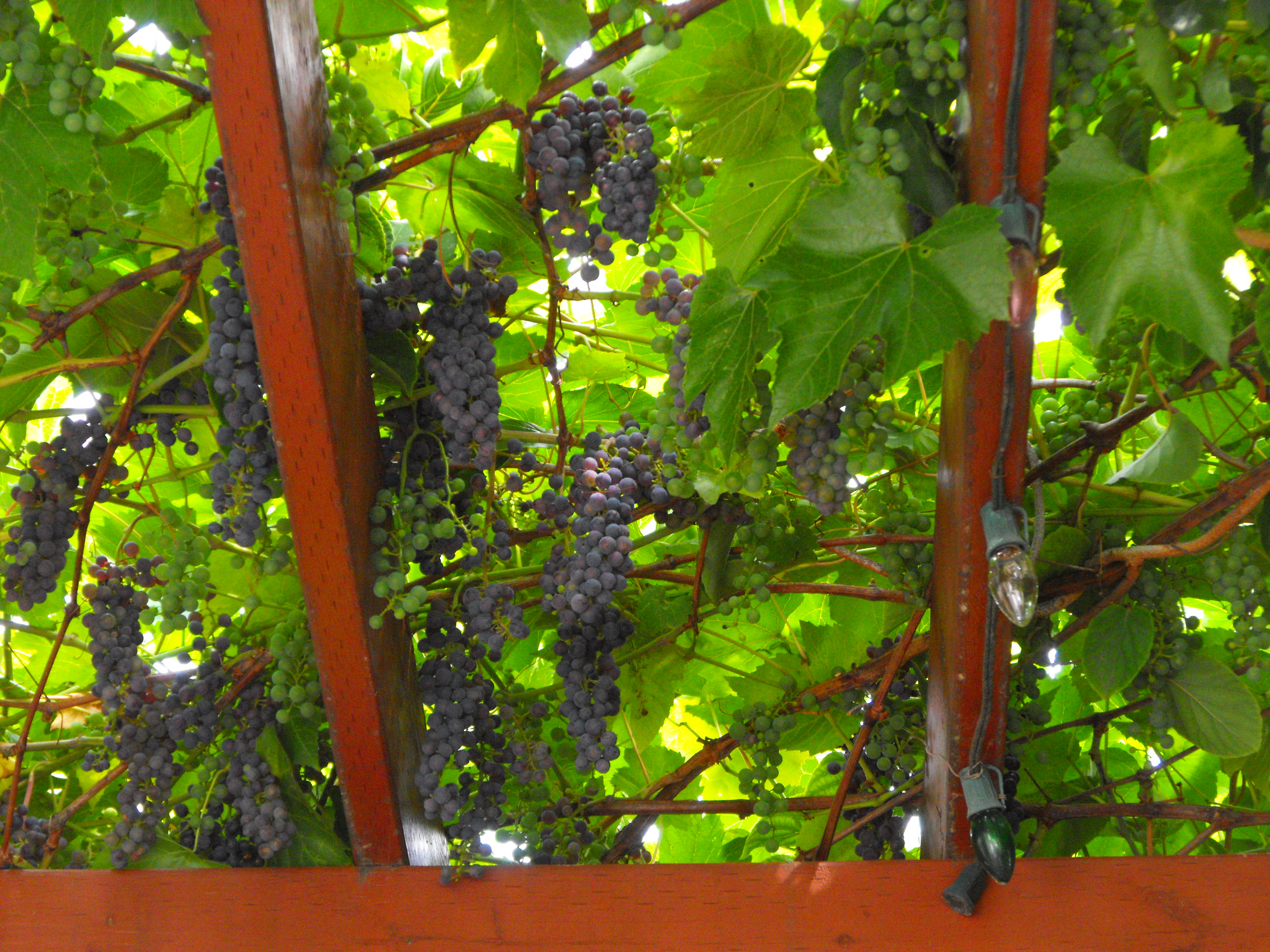
Today, Concord grapes are still very well known and are being grown various places around the world. In some cases, people have started growing these lovely grapes for their ornamental value in their yards. Often, people create trellises or arbors to grow these grapes on and they often allow for a shady place to sit and add beauty to the surrounding landscape. Concord grapes are also grown for eating as well. There are a variety of food products that are made from these grapes including jellies, jams and raisins. The Concord grapes have a wonderful taste that makes them a great choice for these food products.

Another purpose of growing Concord grapes includes wine making, too. These robust grapes are used to make a variety of great tasting wines for the drinking pleasure of people around the world. While Concord grapes are not used by some as they tend to have a very fruity and sweet taste, there has been a revival of their use among a variety of small wineries. In recent years, they have been widely used for dessert wines and kosher wines, but more recently they have been used more and more for tables wines as well.

Since Concord grapes are only one kind of grape among many others, you may be wondering why this specific kind of grape is so popular. Shortly after Concord grapes became known worldwide, they were called “the grape for the millions.” This grape became quickly popular after its creation and is still very popular today because of its versatility and its amazing taste. Later in 1869 Dr. Thomas Bramwell Welch came up with the idea of making juice from Concord grapes and led to Welch’s grape juice, which has continued to make Concord grapes popular. Certain companies have also used Concord grapes for dessert wines, table wines and kosher wines, which has also increased the popularity of these grapes.

Yet another contribution to the popularity of Concord grapes have been recent scientific studies that show these grapes have excellent antioxidant properties and can lower the risk of heart disease. Now products that contain Concord grapes have been approved and recognized by the American Heart Association to significantly lower the occurrence of heart disease. These new findings have increased the consumption of Concord grape based products.

Concord grapes are very easy to grow and are mainly grown east of the Rockies. This type of grape can deal with the cooler temperatures of the north and they usually ripen earlier than most other types of grapes. Some of the states that produce large amounts of these grapes include New York, Pennsylvania, Michigan and even West Virginia. While Concord grapes may not be overly picky about the soil they grow in, they usually do better if there is adequate soil moisture during the growing season. Since these grapes are so easy to grow, they have become a productive crop to grow.

Danie
“The Grape Guy”

Want to grow a Concord, get your copy of the “Complete Grape Growers Guide” and I will show you how to.

Why is canopy management so important

You probably will ask yourself what canopy management is and why you must manage the canopy. A simple answer is to expose the vine to as much direct sunlight as possible. You will notice that I hammer on sunlight exposure in almost all my newsletters and in the Complete Grape Growers Guide. This is for a good reason, as exposure to sunlight is one of the most important things, you as a grape grower must keep in mind – ALWAYS!

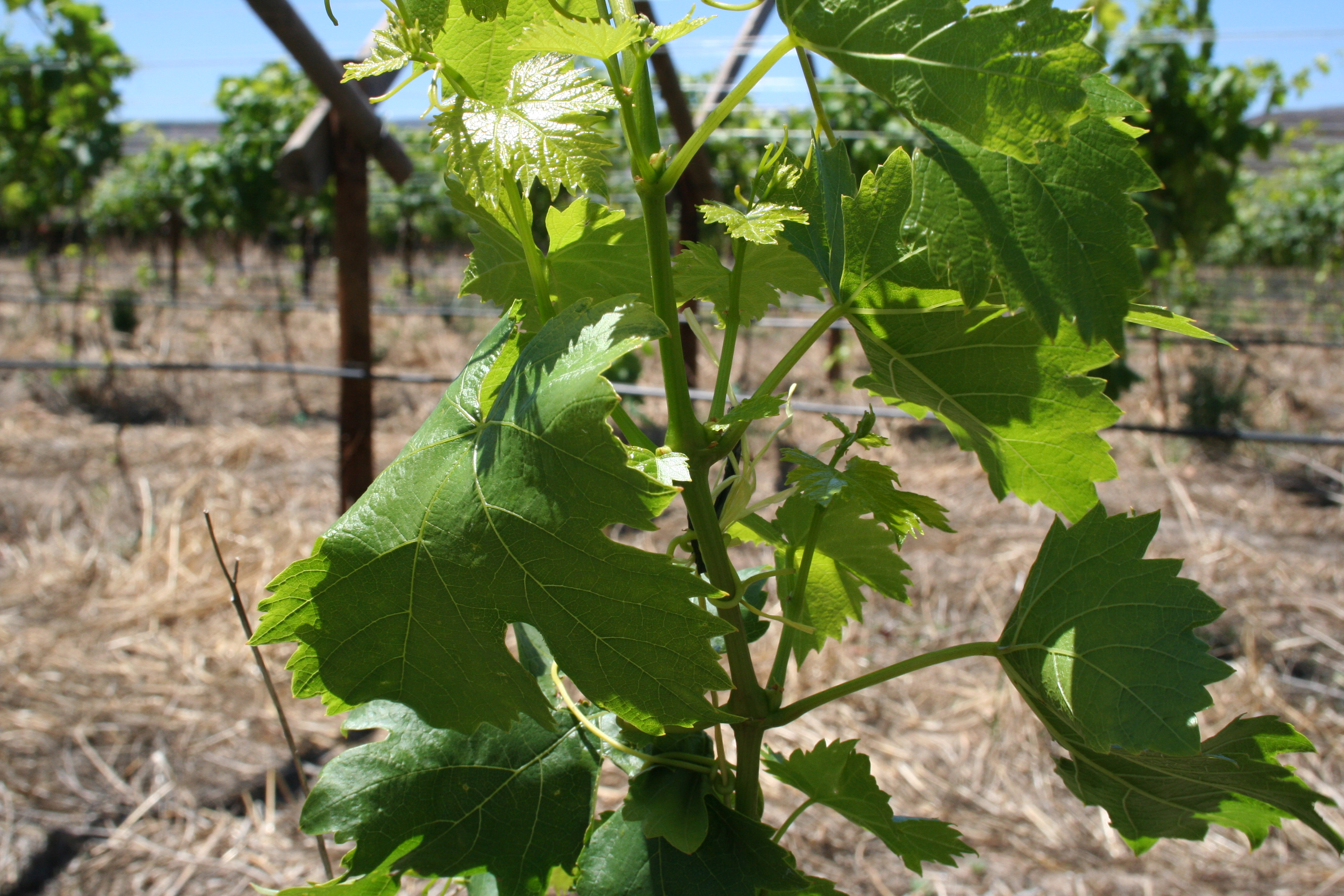
What is a normal or ideal canopy? A few lateral shoots, shoots with big leaves, moderate internodes and a length of 4-5 feet is characterize an ideal canopy. On a canopy like this, almost all of the leaves and buds and shoots are exposed to direct sunlight. The airflow (ventilation) of the vine is good, which will help the prevention of diseases.

When planning a vineyard, no matter what the size, you need to know how fertile your soil is in order to decide the size of your trellis. A too small trellis with a vigorous growing vine, will compact the vine to much and now airflow or sunlight penetration can take place. On the other hand, a too big trellis on a not so vigorous growing vine, is a waste of money, as building a trellis can be quite expensive. The planting distances, also vary on different soil types, which will have a direct influence on the canopy growth. Planting vigorous growing vines too close to each other or making the rows of the vineyard too narrow will also compact the canopy of the vine.

Another reason all grape growers strive to have a well-balanced canopy, is that it reduces the amount of labor it requires to successfully grow grapes. A too vigorous vine will have many shoots to prune during winter, and could take up twice the time to prune than a grape vine with an ideal canopy. Summer treatments, like suckering, removing of leaves, removing of side shoots and the prevention of diseases is much more difficult when the vine has grown too much.

Normally the reason why a grape vine grows too vigorous, or why the canopy of the vine is too compact is because of over-fertilization or over-irrigation on fertile soils. The amount of nitrogen a grape vine needs per year, differ from soil to soil, but a rule of thumb is 120kg N per year. Just to give you an example; one vineyard of Sultana on my farm, gets only 55kg N per year, because it grows on deep, very fertile, sand/clay soils.

If your grape vine is under-vigorous, you can try a few things. Don’t let these vine bear to many grapes, as it will only prevent the vine from growing as it should. Determine why the vine isn’t growing well; look for symptoms of virus infections, see if you have watered the vine enough by digging a hole next to the vine and at the same time have a look at the structure of the soil and how the root system has developed. Sometimes it happens that a clay layer can prevent the roots from spreading into the sub-soil.

If you find, during the growing season, that your grape vine is growing to vigorous and you are the canopy of the vine is getting too compact; there are a few practical things you can do to try to stop the vine before it gets out of hand.

  1. Removing of leaves – this is done by hand and all the leaves close to the cordon or arms of the vine should be removed. Also, remove leaves in the bearing area of the vine (close to clusters). Removing these leaves will ensure better sunlight penetration and airflow. Do not expose clusters to too much direct sunlight, as it will scorch the skin of the grapes, especially if you have a hot climate. Remove leaves after fruit set a then again at varaison (coloring).
  2. Suckering – Remove all water shoots from the cordon or framework of the vine. Under developed and non-bearing shoots can be removed as well, if you find that suckering only water shoots wasn’t enough. Keep in mind that you need prune wood the following winter and never leave less than two shoots on a spur. Suckering shout be done before flowering and never during flowering as this will stimulate more growth that can lead to abortion of fruit.
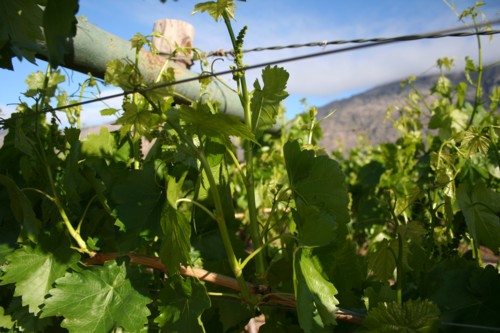
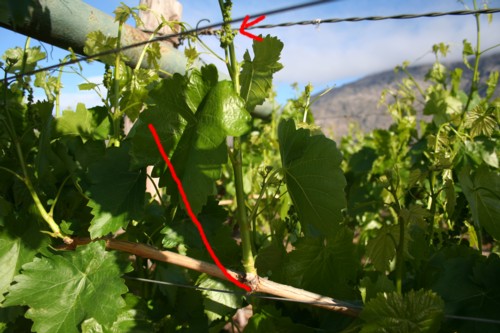
  3. Placing or twining of shoots – The placing or twining of shoots is a well-known manipulation of the grape vine and this should be done when the shoots are about 12 to 16 inches long. Cover the as much as possible wires on the trellis so vine will have maximum exposure to sunlight.
  4. Summer pruning or topping – When your grape vine grows on an arbor or high trellis, and the placing of shoots is difficult, you can summer prune excessive growth by removing the growing point of the vine. Summer prune when the vine has overgrown the trellis and in this case remove more than just the growing point.

Maintaining an ideal canopy for your grape vine is very important and should be done correctly and at the correct time during the growing season.

For further Reference, see the “The Complete Grape Growers Guide” at www.my-grape-vine.com

Danie Wium

“The Grape Guy”

Author of “The Complete Grape Growers Guide”

Pierce’s Disease (PD) on Grape Vines

The History of PD

Pierce’s Disease, also referred to as PD, is a disease in specific plant life that reduces their ability to use the soil for its nutrients and water. It is a bacterium that clogs the vessels in the vine that draws these two necessary items from the soil underneath it. Essentially, what happens is that the vine starves, unable to get the necessary elements; it occurs very slowly and ultimately dies. PD (Pierce’s Disease) effect grape vines, as well as stone fruits, citrus, and almonds.

Back in the late 19th century, a pathologist of plans investigate the first Californian outbreak of the disease and thus the disease was subsequently named after Newton Pierce. However, the disease has been in existence since the 1880’s, when it was then known as Anaheim disease, because it was within the Anaheim area that it was first discovered.

Throughout the years, vineyards have had to fight PD over and over. Severe outbreaks have occurred and after much research and testing, it was discovered that Pierce’s disease is spread by an insect.

The Physiology of PD and what parts of the vine it attacks

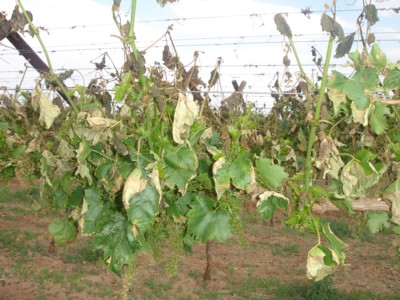
Pierce’s Disease is a slow killing plan disease. It can take up to one year before the vine will begin to show symptoms and signs of the bacteria. It can then take up to three years before the plan will eventually succumb to death by the disease. How can you tell that the grape vine was withered by PD? Well, once killed it is black and very withered. However, there are signs of other symptoms before it reaches that stage. For example, when infected, the vines may promote shriveled or dried grapes, leaves that are underdeveloped, discolored vines, and even growth troubles, it will not be as large as it should.

The insects that spread this disease through grape vines is called the blue-green sharpshooter and the glassy-winged sharpshooter. These are tiny, flying insects that are essentially known as leafhoppers. They feed on the juice from the plants. Upon feeding, the disease transfers from the mouth of insect to an otherwise healthy plant, infecting it with the disease.

Pierce’s Disease, affects the vascular system of the plant. It multiplies and houses in the xylem of the plant, which is a water system that is similar to piping. As stated it is a slow process and difficult to discover until the plant has been infected for one year.

One good thing about PD, is that is does not affect humans in any way, nor does it affect the quality of the wine produced by these grape vines. It is however, responsible for the death of many grape vines throughout California and other wine producing areas.

The susceptible varieties and what to do to prevent PD infections

The only real combative measure against Pierce’s Disease to date is to be attentive to your grape vines and plant varieties that are resistant to the disease. At this time, even with all the research, plant pathologists and scientists have not been able to produce a rootstock, spray, or solid practice that will prevent or reduce a PD infection.

The only real suggestion is to plan grape vine varieties that are resistant to the disease. Here are the resistant varieties:

Orlando Seedless – This is a table grape with great flavor and fairly easy to grow. It will need some pruning and thinning of clusters to maintain, but produces a great tasting wine. Not only is this variety resistant to PD, but also Powdery and Downy Mildew. It is susceptible to Anthracnose and Black Rot however.

Blanc duBois – This a variety of grape for white wines. There is no need for rootstock in most cases, and produces nice sized berries and clusters. As with Orlando Seedless, it is resistant to Downy Mildew and PD, but susceptible to instances of Anthracnose and Black Rot. This variety is not good for soils that are high in pH and poorly drained.

Other great resistant varieties include Black Spanish, a variety for jellies, juices, and red win, Champanel, a variety for red jelly, Favorite, a child of Black Spanish, and Roucaneuf, a table or white wine grape. As well as Herbemont, Norris, Stover, Lake Emeral, Conquistador, Suwannee, Daytona, Miss Blanc, Miss Blue, and Mid South, are all PD resistant varieties.
Overview

The best defense against Pierce’s Disease at this time is to eliminate susceptible varieties and stick with those that have a known resistance, at least until someone develops a solid defense for other varieties.

Danie Wium
“The Grape Guy”
Author of The Complete Grape Growers Guide
http://www-my-grape-vine.com